


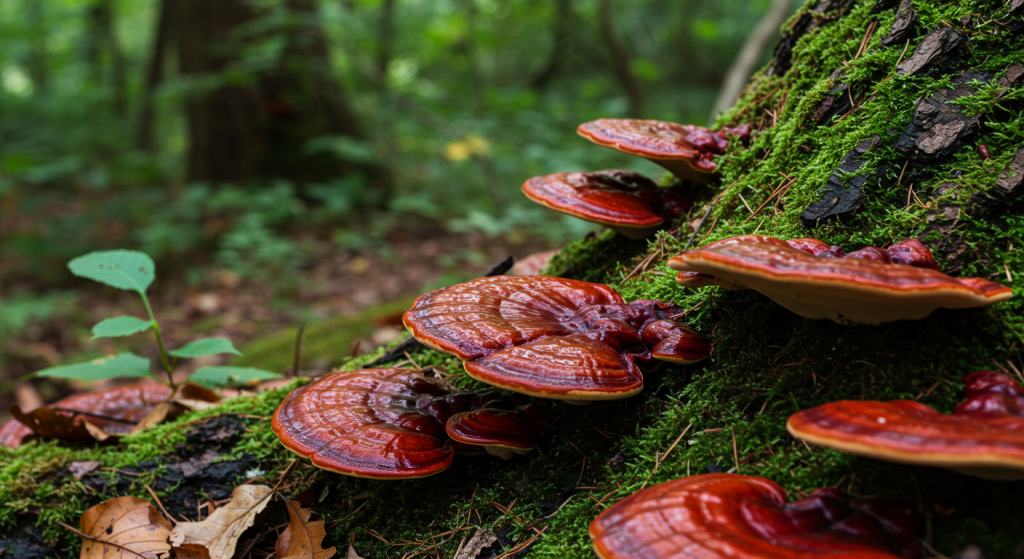
The allure of wild Ganoderma lucidum, comumente conhecido como Reishi ou Lingzhi, has captivated cultures for over 2,000 anos. Often revered as the “mushroom of immortality” in East Asian traditions, this medicinal polypore grows naturally on decaying hardwood trees in pristine forests across Asia, Europa, and North America. Its glossy, reddish-brown cap and potent bioactive compounds—polysaccharides, beta-glucanos, and triterpenoids—have positioned it as a cornerstone of both traditional medicine and the modern wellness movement. With the global functional mushroom market projected to soar to $116.8 bilhões por 2032, wild Reishi’s rarity, pureza, and health benefits, incluindo suporte imunológico, alívio do estresse, e propriedades antioxidantes, make it a sought-after ingredient. This comprehensive guide delves into the biology, historical significance, benefícios para a saúde, harvesting practices, cultivation methods, modern applications, and sourcing strategies for wild Ganoderma lucidum.
What Is Wild Ganoderma Lucidum?
Selvagem Ganoderma lucidum is a polypore mushroom that thrives in natural ecosystems, typically on the trunks of decaying hardwood trees such as oak, bordo, plum, or hemlock in temperate and subtropical forests. Unlike cultivated Reishi, which is grown in controlled environments, wild specimens absorb nutrients directly from their natural surroundings, often resulting in higher bioactive potency due to environmental diversity. The mushroom’s distinctive features include a shiny, varnished cap ranging from red to dark brown, a woody texture, and a bitter taste. Its key bioactive compounds include:
- Polissacarídeos: Complex carbohydrates that support immune function and promote gut health by enhancing immune cell activity and microbiome balance.
- Beta-glucanos: Polysaccharides that boost immune response by activating macrophages and T-cells, as demonstrated in clinical studies.
- Triterpenóides: Compounds with anti-inflammatory, adaptogenic, e propriedades antioxidantes, aiding stress management and cellular protection.
- Esteróis: Plant-based compounds that contribute to cardiovascular health by supporting healthy cholesterol levels and circulation.
The tough, woody nature of wild Reishi makes it unsuitable for direct consumption, but processing into powders, extratos, chás, Cápsulas, or tinctures unlocks its therapeutic potential. Its rarity in the wild—due to specific ecological requirements like humidity, temperatura, and host tree availability—enhances its mystique and value, making it a prized ingredient in wellness products.
Historical and Cultural Significance of Wild Ganoderma Lucidum
Reishi’s historical significance is profound, profundamente enraizado nas tradições herbais do Leste Asiático. O *Shen Nong Ben Cao Jing *, a foundational Chinese pharmacopeia from around 200 BCE, describes Reishi as a divine herb capable of promoting longevity, vitalidade, e clareza espiritual. It was reserved for emperors and Taoist monks, who used it to enhance meditation and physical resilience. No Japão, where it is known as “Mannentake” (10,000-year mushroom), Reishi was brewed into teas to foster calm and fortitude, often associated with spiritual practices. Its scarcity in the wild made it a luxury commodity, symbolized in art, textiles, and architecture as a sign of divine favor and prosperity.
In the modern era, wild Ganoderma lucidum has transcended its cultural origins to become a global wellness icon, amplificado pelas mídias sociais e validação científica. Posts on platforms like Instagram and TikTok with hashtags such as #ReishiMushroom, #MushroomWellness, and #NaturalHealing highlight its benefits for immunity, dormir, e alívio do estresse, resonating with millennials and Gen Z who prioritize holistic health. The mystique of wild Reishi, harvested from untouched forests, adds to its appeal, representing a connection to nature’s raw potency. Suppliers now process wild and cultivated Reishi to meet this demand, delivering organic extracts that honor its traditional uses while adhering to modern quality and sustainability standards.
Why Wild Ganoderma Lucidum Stands Out
Selvagem Ganoderma lucidum is distinguished from cultivated Reishi by several unique attributes that enhance its appeal:
- Higher Bioactive Potency: The diverse nutrients and stressors in natural ecosystems may enhance the concentration of polysaccharides, beta-glucanos, e triterpenóides, potentially offering superior therapeutic effects compared to cultivated varieties.
- Purity and Authenticity: Livre de pesticidas sintéticos, fertilizantes, ou OGM, wild Reishi appeals to purists seeking unadulterated, natural remedies.
- Rarity and Exclusivity: Its limited availability in the wild increases its perceived value, making it a premium ingredient for luxury wellness products.
- Ecological Connection: Harvested from pristine forests, wild Reishi resonates with eco-conscious consumers who value products with minimal environmental impact.
- Unique Terroir: Like fine wine, wild Reishi’s flavor and potency vary by region, reflecting the soil, climate, and host trees of its habitat.
Contudo, the rarity of wild Reishi raises concerns about overharvesting, necessitating sustainable practices to protect ecosystems and ensure long-term availability.
Science-Backed Health Benefits of Wild Ganoderma Lucidum
The health benefits of wild Ganoderma lucidum are rooted in traditional use and increasingly validated by modern science, making it a powerhouse ingredient in wellness applications. The key benefits include:
- Suporte ao sistema imunológico: Beta-glucans and polysaccharides enhance the activity of T-cells and macrophages, bolstering the body’s defense against pathogens, como mostrado em estudos de modulação imunológica.
- Stress Relief and Mental Clarity: Triterpenóides atuam como adaptógenos, reduzindo a fadiga, alleviating anxiety, and promoting mental clarity, supported by research on stress-related fatigue and mood regulation.
- Defesa antioxidante: Reishi’s compounds neutralize free radicals, protecting cells from oxidative damage and supporting longevity and skin health, with preclinical studies suggesting lifespan extension in animal models.
- Efeitos anti-inflamatórios: A modulação das citocinas reduz a inflamação, ajudando a saúde das articulações, muscle recovery, and chronic condition management, as demonstrated in scientific research.
- Saúde Cardiovascular: Triterpenoids and sterols may improve blood circulation and cholesterol levels, aligning with traditional uses for vitality and heart health.
- Saúde intestinal: Fibras prebióticas nutrem bactérias intestinais benéficas, enhancing digestion, absorção de nutrientes, and mood regulation, as shown in microbiome studies.
- Saúde da pele: The antioxidant and anti-inflammatory properties of Reishi make it a rising star in skincare, reducing redness, promoting hydration, and combating signs of aging.
Wild Reishi’s exposure to natural stressors may enhance its bioactive content, potentially offering superior potency compared to cultivated varieties, though more research is needed to confirm this. Its chemical-free nature ensures these benefits are delivered without contaminants, maximizando a eficácia para aplicações de bem-estar.
Harvesting Wild Ganoderma Lucidum
Harvesting wild Ganoderma lucidum is a delicate process that requires expertise, ecological awareness, and adherence to sustainable practices to preserve natural ecosystems. Key aspects include:
- Identification: Wild Reishi is identified by its glossy, reddish-brown to dark brown cap, often with a varnished appearance, growing on decaying hardwood trees. It typically appears in summer and fall, with a fan-shaped or kidney-shaped fruiting body. Misidentification with toxic look-alikes, como Ganoderma tsugae, is a risk, requiring expert knowledge or testing.
- Key Locations: Reishi grows in forests across China, Japão, Coréia, Sudeste Asiático, Europa, and North America, favoring humid, shaded environments with old-growth trees. Notable regions include Fujian (China), Hokkaido (Japão), and the Appalachian Mountains (EUA).
- Sustainable Harvesting Practices: Ethical foragers use selective harvesting, taking only mature fruiting bodies and leaving younger ones to ensure regrowth. They obtain permits, follow local regulations, and avoid overharvesting to protect ecosystems and maintain biodiversity.
- Challenges: The rarity of wild Reishi, combined with increasing demand, poses risks of overexploitation. Environmental factors like deforestation, climate change, and habitat loss further threaten wild populations, making sustainable practices critical.
- Ethical Considerations: Foragers work with local communities and conservation groups to ensure harvesting supports ecological balance. Certifications like USDA Organic or FairWild verify sustainable sourcing.
Sustainable harvesting is essential to preserve wild Reishi’s availability and ecological integrity, balancing its commercial value with environmental stewardship.
Production Process of Wild Reishi Extract Powder
Processing wild Ganoderma lucidum into extract powder involves a series of meticulous steps to preserve its bioactives and ensure safety. The process includes:
Collection and Cleaning
Harvested wild Reishi is cleaned to remove debris, solo, or insects, ensuring only high-quality fruiting bodies or spores are used. This step is critical to prevent contamination and maintain purity.
Secagem
The cleaned Reishi is dried at low temperatures (40–50 ° C.) using infrared or freeze-drying technology to preserve delicate bioactives like beta-glucans and polysaccharides. This reduces moisture content to under 10%, ensuring shelf stability without compromising nutritional value.
Extração
To unlock Reishi’s bioactives, suppliers use advanced extraction methods to break down the indigestible chitin cell walls. Common techniques include:
- Extração de Água Quente: Isolates polysaccharides, critical for immune support and gut health.
- Extração de etanol: Captures triterpenoids, responsible for anti-inflammatory and adaptogenic effects.
- Extração Dupla: Combines both methods to produce full-spectrum extracts, maximizing the range of bioactives, as utilized by suppliers like Real Mushrooms.
- Extração supercrítica de CO2: A premium, solvent-free method for high-purity extracts, though less common for powders.
Some suppliers use a “shellbroken” technique, grinding spores into ultra-fine powders to enhance absorption.
Padronização e Testes de Qualidade
Os extratos são padronizados para níveis bioativos específicos (Por exemplo,, 30% Polissacarídeos, 2% triterpenóides) para consistência. Third-party laboratories test for heavy metals, pesticidas, micróbios, e resíduos químicos, com certificados de análise (COA) verifying safety and compliance. Teste de DNA confirma autenticidade de Reishi, avoiding adulteration.
Fresagem e Embalagem
O extrato é moído até formar um pó fino e embalado em recipiente hermético., recipientes resistentes à luz – bolsas biodegradáveis, recyclable bottles, ou sacos a granel - para preservar a potência. Eco-friendly packaging aligns with sustainability goals.
Applications of Wild Ganoderma Lucidum Extract
Wild Reishi extract is versatile, usado em:
- Suplementos: Cápsulas ou pós para suporte imunológico e de estresse.
- Bebidas funcionais: Chás ou Rótulo Privado Reishi Coffee.
- Cuidados com a pele: Serums for anti-aging.
- Alimentos funcionais: Smoothies, sopas.
Tabela de comparação: Selvagem vs.. Cultivated Reishi
| Aspect | Wild Reishi | Cultivated Reishi |
|---|---|---|
| Fonte | Natural forests | Controlled farms |
| Potência Bioativa | Potentially higher, variable | Consistent, controlled |
| Availability | Rare, limited | Abundant, scalable |
| Custo | Mais alto ($20–$60/unit) | Lower ($5–$15/unit) |
| Sustentabilidade | Risk of overharvesting | Sustainable, controlled |
Top Wholesale Suppliers for Wild Reishi
While wild Reishi is rare, some suppliers offer ethically sourced or cultivated alternatives:
- Ganoherb (China): USDA Organic, Tecnologia Juncao, offers cultivated Reishi with wild-like potency.
- NamMex (Canadá): Extratos orgânicos com beta-glucanos verificados.
- MyCotrition (Alemanha): EU Organic, high-polysaccharide powders.
- Hokkaido Reishi (Japão): Premium extracts, some wild-sourced.
- Biológica (EUA): USDA Organic extracts.
- Poderosos fungos (Estônia): Low-MOQ organic powders.
- Medikonda Nutrients (India/USA): Bulk organic supplier.
Sourcing Wild Reishi: Considerações importantes
When sourcing wild Reishi:
- Certificações: USDA Organic, FairWild for ethical harvesting.
- Testes de terceiros: CoAs verify bioactives (30%+ Polissacarídeos) e segurança.
- Preferência Corporal de Frutificação: Higher bioactives than mycelium.
- Traceability and Ethics: Ensure sustainable, fornecimento transparente.
- Métodos de extração: Extração dupla para bioativos de espectro total.
- MOQS: MOQS baixo (50–500 unidades) para startups.
Platforms like GanodermaBuy connect you with trusted suppliers.
Private Label Opportunities with Wild Reishi Suppliers
Wild Reishi suppliers offer private label opportunities:
- Formulações personalizadas: Blend with Chaga, Juba de Leão, ou ervas como ashwagandha para produtos exclusivos, such as immunity capsules or relaxation teas.
- MOQS baixo: Comece com 50-500 unidades, Conforme oferecido por poderosos fungos, enabling market testing with minimal risk.
- Serviços OEM/ODM: Suppliers like Mycotrition provide label design, empacotamento, and formulation support.
- Altas margens de lucro: Retail at $20–$60 for 50–70% margins on $5–$20 production costs, leveraging wild Reishi’s premium appeal.
Private label products, como cápsulas, chás, ou Rótulo Privado Reishi Coffee, target niches like immunity or stress relief, expanding brand reach.
Construindo uma marca Reishi de marca própria de sucesso
Para criar uma marca Reishi de marca própria de destaque:
- Market Positioning: Target immunity, relaxamento, ou foco.
- Branding and Design: Use tons terrosos e logotipos minimalistas para evocar bem -estar. Suppliers like NutraCap Labs offer design support.
- Narrativa: Highlight Reishi’s history and wild sourcing.
- Marketing: Aproveite o SEO com palavras-chave como Rótulo Privado Reishi, promover no Instagram (#Reishiwellness), and collaborate with influencers.
A compelling narrative and eco-friendly packaging enhance market appeal.
Sustainability in Wild Reishi Harvesting and Production
Suppliers prioritize sustainability:
- Tecnologia Juncao: Ganoherb usa gramíneas, redução do desmatamento.
- Organic Practices: Nammex avoids chemicals, preservando a saúde do solo.
- Eco-embalagem: Bolsas biodegradáveis, Como usado por Hokkaido Reishi.
- Ethical Harvesting: Selective foraging with permits, as with FairWild-certified suppliers.
Essas práticas se alinham com a demanda do consumidor, com 73% preferring eco-friendly products, por um 2024 Pesquisa NielsenIQ.
Challenges in Sourcing Wild Reishi and Solutions
Sourcing wild Reishi presents challenges:
- Rarity and Limited Supply: Wild Reishi is scarce, increasing costs. Solução: Use cultivated Reishi from suppliers like GanoHerb, mimicking wild potency.
- Variabilidade da qualidade: Environmental factors affect potency. Solução: Request CoAs and samples to verify bioactive content.
- Overharvesting Risks: Unsustainable practices deplete resources. Solução: Source from ethical suppliers with FairWild or organic certifications.
- Conformidade Regulatória: Health claims must meet FDA standards. Solução: Partner with suppliers providing compliant documentation.
- Atrasos na cadeia de suprimentos: Global sourcing can cause delays. Solução: Use regional distributors like GanodermaBuy.
Global Impact of Wild Reishi Suppliers
Suppliers are reshaping wellness by:
- Atendendo à demanda: Supplying health-conscious consumers.
- Impulsionando a Inovação: Developing new formats like Reishi skincare.
- Apoiando Economias: Creating jobs in cultivation regions.
- Promovendo a Sustentabilidade: Aligning with green trends.
Perguntas Frequentes (Perguntas frequentes)
1. What is wild Ganoderma lucidum?
A Reishi mushroom growing naturally on hardwoods, rico em bioativos.
2. Why choose wild Reishi?
Higher potency, pureza, and eco-appeal.
3. What are its health benefits?
Suporte imunológico, alívio do estresse, antioxidant effects.
4. How is wild Reishi harvested?
Ethically from forests, with permits to prevent overharvesting.
5. Where can I source wild Reishi?
From suppliers like GanoHerb, NamMex, ou GanodermaComprar.
6. Posso criar uma marca Reishi de marca própria?
Sim, with custom blends and OEM/ODM services.
7. What is the cost of sourcing wild Reishi extract?
$5–$20 per unit, retailing at $20–$60, yielding 50–70% margins.
8. Is wild Reishi sustainable?
With ethical harvesting and certifications like FairWild, sim.
9. How does wild Reishi compare to cultivated?
Wild may have higher potency but is rarer and costlier.
10. Are there risks in sourcing wild Reishi?
Overharvesting and quality variability; mitigated by ethical suppliers.
Conclusão
Selvagem Ganoderma lucidum, O cogumelo de Reishi, is a wellness treasure, offering potent benefits like immune support and stress relief. Its rarity and natural potency make it a premium ingredient, supported by suppliers like GanoHerb, NamMex, e Micotrição, who balance wild and cultivated sources for sustainability. From capsules to Rótulo Privado Reishi Coffee, Reishi’s versatility drives the $116.8 mercado de cogumelos funcionais de bilhões. Source ethically with certifications, testando, and traceability to build a successful brand. Conecte -se com Ganodermabuy para prêmio Extrato de cogumelo de Reishi, Serviços OEM/ODM, e soluções de marca própria, e liderar a revolução do bem -estar hoje.


