


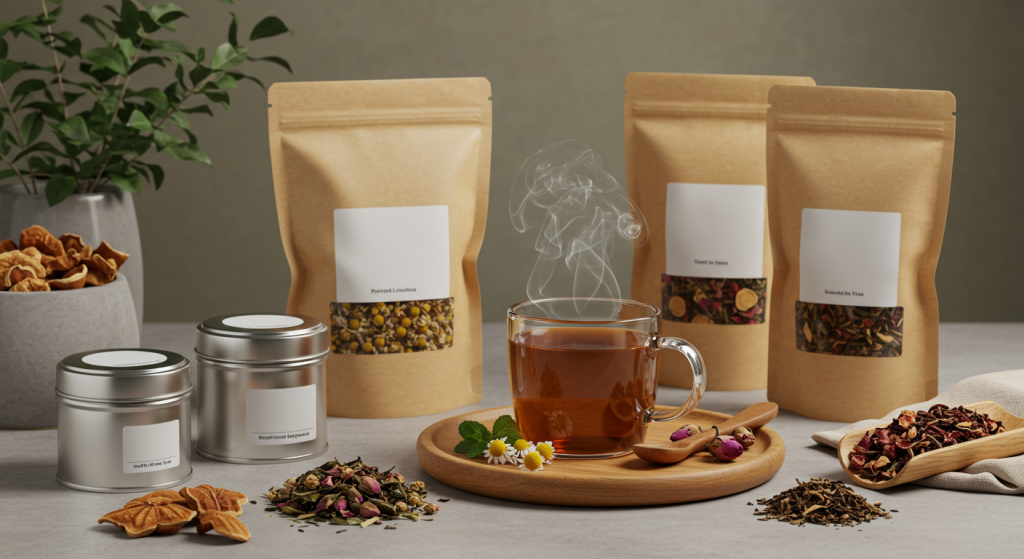
Imagine sipping a warm cup of herbal tea, infused with the ancient power of Ganoderma lucidum (Reishi) or vibrant botanicals like chamomile and peppermint, all under your brand name. Private label herbal tea lets you turn this vision into reality, offering a low-risk, high-reward way to enter the $4.4 billion global tea market, with functional blends like Reishi driving growth. Fazendo parceria com um fornecedor de marca própria, you can focus on branding and marketing while experts handle sourcing, mistura, e embalagem. This comprehensive guide walks you through the steps to launch your private label herbal tea business, spotlighting Reishi’s wellness benefits, seleção de fornecedores, e práticas sustentáveis. Whether you’re a wellness entrepreneur or a café owner, this is your roadmap to brewing success.
What Is Private Label Herbal Tea?
Private label herbal tea involves partnering with a manufacturer to produce custom or pre-formulated tea blends, which you sell under your brand. Ao contrário do rótulo branco (pre-made blends sold to multiple brands), private label offers unique formulations, perfect for creating distinctive Reishi or botanical teas. These blends, often caffeine-free, combine herbs, frutas, Especiarias, and medicinal mushrooms like Reishi, Chaga, ou Juba de Leão, visando consumidores preocupados com a saúde que buscam imunidade, relaxamento, or energy boosts.
Suppliers handle cultivation, mistura, e embalagem, allowing you to focus on your brand’s story—whether it’s organic Reishi wellness or vibrant fruit infusions. The global herbal tea market is projected to grow at a 7.6% CAGR através 2030, driven by demand for functional beverages, making now the perfect time to launch.
Why Reishi in Herbal Tea?
Reishi, the “mushroom of immortality,” is a star ingredient in private label herbal teas. Used for over 2,000 anos nas tradições chinesa e japonesa, Ganoderma lucidum is prized for its bioactive compounds—polysaccharides, beta-glucanos, and triterpenoids—that offer potential health benefits. É terreno, slightly bitter flavor pairs well with herbs like peppermint or licorice, creating balanced, wellness-focused blends. Reishi’s adaptogenic properties make it a magnet for consumers seeking natural remedies, boosting the appeal of your brand.
Benefits of Reishi Herbal Tea
Reishi-infused herbal tea combines wellness with flavor. Below is a table of key benefits, seguido de informações detalhadas:
| Beneficiar | Descrição | Suportado por |
|---|---|---|
| Suporte imunológico | Melhora a resposta imunológica com beta-glucanos. | Immune cell studies |
| Alívio do estresse | Promove calma como um adaptogen. | Fatigue research |
| Defesa antioxidante | Combate os radicais livres para obter vitalidade. | Estudos de estresse oxidativo |
| Anti-inflamatório | Facilita a inflamação para a saúde geral. | Cytokine studies |
| Saúde intestinal | Apoia a digestão com fibras prebióticas. | Gut microbiome research |
Suporte imunológico
Reishi’s beta-glucans activate macrophages and T-cells, fortalecendo a imunidade. Studies suggest enhanced resilience against pathogens, making Reishi tea a go-to for seasonal wellness.
Alívio do estresse
Triterpenoids in Reishi act as adaptogens, reduzindo o estresse e promovendo clareza mental. A pesquisa sobre fadiga está alinhada com seu uso tradicional na meditação, ideal for calming blends.
Defesa antioxidante
Os antioxidantes do Reishi neutralizam os radicais livres, apoiando a saúde e a longevidade da pele. Preclinical studies show lifespan benefits, aumentando seu apelo antienvelhecimento.
Anti-inflamatório
Reishi reduz citocinas inflamatórias, Ajudando a saúde e a recuperação das articulações. Studies highlight its role in tissue repair, melhorando o bem-estar geral.
Saúde intestinal
Reishi’s prebiotic fibers feed beneficial gut bacteria, apoiando a digestão e o humor. Research suggests gut microbiome benefits, adicionando profundidade ao seu perfil de saúde.
Step-by-Step Guide to Launching Your Private Label Herbal Tea
Pronto para preparar sua marca? Follow these steps to find a private label herbal tea supplier and launch your Reishi-infused tea business.
Passo 1: Defina sua marca e visão de produto
Start by envisioning your herbal tea line. Key questions:
- Tea Type: Folha solta, pyramid sachets, or tea bags? Folhas soltas apelam aos mercados premium, while sachets are convenient.
- Ingredientes: Focus on Reishi, or blend with herbs like chamomile, ruivo, ou rosa mosqueta? Misturas funcionais (por exemplo, imunidade, relaxamento) estão em alta.
- Público-alvo: Wellness seekers, geração do milênio, or eco-conscious consumers? Younger demographics (25–34) prefer herbal blends over black tea.
- Embalagem: Eco-friendly tins, bolsas biodegradáveis, ou caixas de presente? Custom labels with vibrant designs attract attention.
- Preço: Orçamento ($5–10 por lata) ou prêmio ($15–30)? Reishi’s health appeal justifies higher prices.
Ação: Write a product brief outlining your blend (por exemplo, Reishi-peppermint for relaxation), embalagem, e história da marca (por exemplo, “Pure wellness from nature”). Study brands like Four Sigmatic for inspiration.
Passo 2: Escolha marca própria vs.. Etiqueta branca
Decide between:
- Marca própria: Blends personalizados exclusivos para sua marca, like a Reishi-lavender tea. Quantidades mínimas mais altas (100–1.000 unidades) but unique market positioning.
- Etiqueta branca: Misturas pré-fabricadas vendidas para várias marcas. Quantidade mínima de pedidos (50–100 unidades) e custos, ideal for testing markets.
For Reishi tea, private label is best for creating a standout wellness brand, mas a marca branca é adequada para startups com orçamentos limitados. Suppliers like Caraway Tea offer both options.
Passo 3: Find Private Label Herbal Tea Suppliers
Search for suppliers specializing in herbal and mushroom teas. As fontes incluem:
- Diretórios on-line: Thomasnet, Alibaba, or Wonnda list suppliers like Floralpina (Europa) or GanoHerb (China).
- Feiras: Attend Natural Products Expo or Tea & Coffee World Cup to meet suppliers and sample Reishi blends.
- Rede: Join tea industry forums or LinkedIn groups for recommendations from wellness brands.
- Google: Search “private label Reishi herbal tea supplier” or “organic herbal tea manufacturer.”
Principais fornecedores:
- Chá de cominho (EUA): Offers organic Reishi blends, formulações personalizadas, and biodegradable pyramid sachets. MOQs baixos para startups.
- Ganoherb (China): Maior fornecedor de Ganoderma orgânico do mundo, specializing in Reishi teas. Certificado orgânico pelo USDA.
- Chá Harris (EUA): Largest private label tea manufacturer, with GFSI-certified facilities in Georgia and New Jersey.
- The Tea Can Company (EUA): Premium herbal blends with custom cans, ideal for branding.
- Tiesta Tea (EUA): 30+ organic blends, incluindo Reishi, with 25-pound bulk options.
GanodermaBuy faz parceria com fornecedores semelhantes, offering Reishi teas from organic, high-standard sources.
Passo 4: Evaluate Supplier Quality
Assess suppliers to ensure they meet your standards:
- Certificação orgânica: USDA Organic ou EU Organic para Reishi e ervas, garantindo que não haja pesticidas.
- Métodos de extração: Extração dupla (água quente e etanol) for Reishi to capture polysaccharides and triterpenoids.
- Teste: Laboratórios terceirizados para metais pesados, pesticidas, e micróbios. Solicitar CoAs.
- Personalização: Can they create a Reishi-chamomile blend or match a specific flavor profile? Caraway Tea excels here.
- MOQS: MOQS baixo (50–100 unidades) para startups. The Tea Spot offers flexible minimums.
- Opções de embalagem: Sachês biodegradáveis, latas, ou bolsas. Harris Tea packs square, Rodada, or pyramid bags.
- Sustentabilidade: Tecnologia Juncão ou embalagem ecológica, como as práticas verdes da GanoHerb.
Ação: Solicite amostras de 3 a 5 fornecedores para comparar a potência do Reishi, sabor, e embalagem. Test for taste and solubility.
Passo 5: Solicite orçamentos e negocie
Contate os fornecedores com o resumo do seu produto para cotações. Key questions:
- Custo por unidade (por exemplo, $0.50–$2 por sachê, $5–$ 15 por lata)?
- Taxas de configuração para misturas ou rótulos personalizados?
- MOQ e descontos em massa?
- Prazos de produção e envio (2–6 weeks typical)?
- Opções de dropshipping ou direto ao cliente?
Negotiate for lower MOQs or better pricing for initial orders. Ensure contracts cover quality guarantees, cronogramas de entrega, e exclusividade para blends personalizados. Suppliers like Custom Co-Pak assign dedicated reps to guide you.
Passo 6: Projete sua marca
Your brand is your story. Create a compelling identity:
- Logotipo e etiquetas: Use vibrant designs reflecting wellness (por exemplo, earthy greens for Reishi). Suppliers like The Tea Can Company offer label templates or design services.
- História da Marca: Highlight Reishi’s benefits—e.g., “Pure calm in every sip.” Emphasize organic and sustainable sourcing.
- Embalagem: Choose eco-friendly options like biodegradable pouches or recyclable tins to appeal to green consumers.
Ação: Use o Canva ou contrate um designer para etiquetas. Suppliers may provide InDesign files for custom packaging.
Passo 7: Teste e lançamento
Before scaling, test your product:
- Exemplo de feedback: Share with friends, família, or focus groups to refine blends or packaging.
- Lançamento suave: Venda de 50 a 100 unidades via Shopify, Etsy, ou mercados locais para avaliar a demanda.
- Marketing: Promote on Instagram or TikTok with #ReishiTea or #HerbalWellness. Compartilhe a história de saúde de Reishi para envolver os clientes.
Ajuste com base no feedback, então peça lotes maiores. Suppliers like Dripshipper integrate with Shopify for seamless fulfillment.
Passo 8: Scale and Partner Long-Term
Build a lasting relationship with your supplier:
- Communicate regularly about inventory and trends (por exemplo, adding Lion’s Mane).
- Negocie melhores condições à medida que os pedidos aumentam.
- Explore novos formatos, como chá Reishi gelado, para expandir sua linha.
Suppliers like Tiesta Tea support scaling with bulk options and R&D expertise.
Desafios e soluções
- MOQS alto: Choose suppliers like Lifetime Tea with low minimums for startups.
- Margens de custo: Private label teas cost $5–$15 per unit; premium branding justifies $20–$40 retail prices.
- Controle de Qualidade: Request samples and CoAs to ensure Reishi potency and herb quality.
- Regulamentos: Ensure FDA or local compliance for health claims. Suppliers like Harris Tea handle labeling compliance.
Sustainability in Private Label Herbal Tea
Top suppliers prioritize eco-friendly practices:
- Tecnologia Juncao: GanoHerb cultiva Reishi em gramíneas, redução do desmatamento.
- Agricultura orgânica: Evita produtos químicos sintéticos, as seen with Caraway Tea’s estates.
- Eco-embalagem: Sachês biodegradáveis ou latas recicláveis, like The Tea Can Company’s options.
Choosing sustainable suppliers via GanodermaBuy aligns your brand with green values, attracting eco-conscious consumers.
Who’s Your Target Market?
Private label Reishi herbal tea appeals to:
- Buscadores de bem -estar: Chasing immune and stress-relief benefits.
- Geração Y: 48% of 25–34-year-olds prefer herbal blends.
- Compradores Eco-Conscientes: Valuing organic and sustainable products.
- Proprietários de cafeterias: Adicionando chás exclusivos aos menus.
Tailor your branding to these groups for maximum impact.
Potencial de custo e lucro
Startup costs range from $1,000–$5,000 for 50–200 units, including samples, Selos, e marketing. Os preços de varejo de US$ 10 a US$ 40 por lata rendem margens de 50 a 70%, with premium Reishi blends commanding higher prices. Suppliers like Special Tea Company suggest starting with multiple small batches to test best-sellers, minimizing inventory risk.
Perguntas Frequentes (Perguntas frequentes)
1. What’s private label herbal tea?
Custom or pre-formulated teas sold under your brand, produced by a supplier handling blending and packaging.
2. Why include Reishi?
Reishi adds immune, alívio do estresse, e benefícios antioxidantes, atraente para consumidores de bem-estar.
3. How much does it cost to start?
$1,000–$ 5.000 para pedidos iniciais, Selos, e marketing, depending on MOQs and customization.
4. Where do I find suppliers?
Use Thomasnet, Alibaba, ou feiras. Experimente o chá de cominho, Ganoherb, or Harris Tea for Reishi blends.
5. Is it safe?
Reishi is generally safe but may cause mild digestive upset or interact with blood thinners. Consult a doc if on meds.
6. Quanto tempo para lançar?
1–3 meses, desde o fornecimento até o lançamento suave, with suppliers like The Tea Spot streamlining production.
Conclusão
Launching a private label herbal tea brand with Reishi is your chance to ride the wellness wave, offering consumers a sip of health and harmony. From defining your Reishi-chamomile blend to partnering with organic suppliers like Caraway Tea or GanoHerb, this guide equips you to build a standout brand. Com práticas sustentáveis, quantidade mínima para pedido, and a market hungry for functional teas, now’s the time to brew your success. Start your journey with trusted sources like Ganodermabuy and let your Reishi-infused herbal tea captivate the world.


