


Wu Tingyao
Seja usado sozinho ou em combinação, Lingzhi (também chamado de Ganoderma lucidum ou Reishi) tem os efeitos de regular a pressão arterial, reduzindo os sintomas subjetivos e melhorando os lipídios no sangue. Além disso, o uso prolongado de Lingzhi não causará efeitos negativos nas funções do corpo. Para detalhes, veja “Testes clínicos 50 anos atrás confirmaram que Lingzhi pode melhorar a hipertensão” e “Estudos clínicos confirmaram que Lingzhi melhora a pressão arterial elevada, mas não afeta a pressão arterial normal”.
Contudo, Lingzhi não só tem os benefícios acima para a hipertensão, mas também melhora a viscosidade do sangue, microcirculação (circulação sanguínea dos capilares), açúcar no sangue e resistência à insulina em pacientes hipertensos. Mesmo sem afetar a pressão arterial, pode promover a microcirculação e aumentar a perfusão sanguínea em pessoas saudáveis.
Lingzhi melhora a pressão arterial em pacientes hipertensos com alta viscosidade sanguínea.
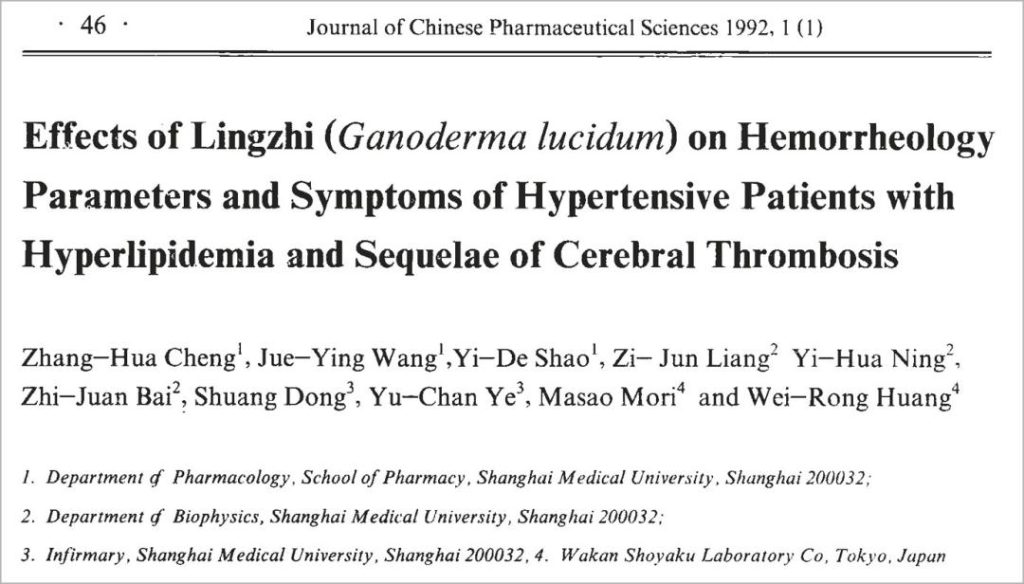
Em 1992, A Shanghai Medical University e o Wakan Shoyaku Laboratory Co publicaram conjuntamente um relatório clínico no “Journal of Chinese Pharmaceutical Sciences”, que analisou os benefícios de comer Lingzhi em pacientes com doenças cardiovasculares e alta viscosidade sanguínea. Um total de 33 assuntos (45 para 86 anos) foram testados, e 17 deles tinham hipertensão.
Eles levaram 2 Comprimidos Lingzhi (contendo 110 mg de extrato de água corporal de frutificação Lingzhi, equivalente a 2.75 g Corpo de frutificação Lingzhi) por dia. Depois 2 semanas, mais da metade dos indivíduos melhoraram seus sintomas, como dor de cabeça, deslumbrar, dormência dos membros, aperto no peito e insônia; para pessoas com pressão alta, a pressão arterial sistólica e diastólica diminuiu em 12.5 mmHg (8.5%) e 6.4 mmHg (7.2%), respectivamente, o que é uma diferença estatisticamente significativa em comparação com antes do teste (Figura 1).
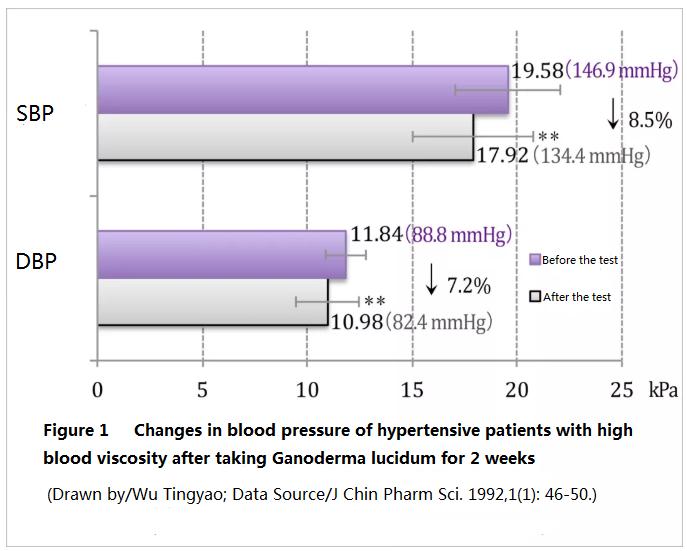
A pressão arterial pode ser afetada pela frequência cardíaca (o número de vezes que o coração bate por minuto em repouso) e também está positivamente correlacionado com a viscosidade do sangue (resistência ao fluxo sanguíneo).
Como todos os assuntos (incluindo aqueles com pressão arterial normal) não houve diferença significativa na frequência cardíaca antes e depois do teste (74 vezes→77 vezes), estavam todos na faixa normal, mas a viscosidade do sangue foi significativamente reduzida. Portanto, Especula-se que a razão pela qual o Lingzhi pode reduzir a pressão alta pode estar relacionada à melhora da viscosidade do sangue.
Lingzhi melhora a hipertensão arterial difícil de tratar e também melhora a viscosidade do sangue e a microcirculação.
Para confirmar ainda que existe uma relação entre a melhoria da pressão arterial elevada pelo Lingzhi e a melhoria da viscosidade do sangue, a equipe da Shanghai Medical University e do Wakan Shoyaku Laboratory Co, em colaboração com o Quarto Hospital Popular da cidade de Xuzhou, usaram as mesmas preparações de Lingzhi do estudo acima para conduzir um estudo randomizado (agrupado), duplo-cego (tanto os investigadores quanto os sujeitos não sabiam a qual grupo os sujeitos foram atribuídos) e teste clínico controlado por placebo em pacientes com hipertensão refratária.
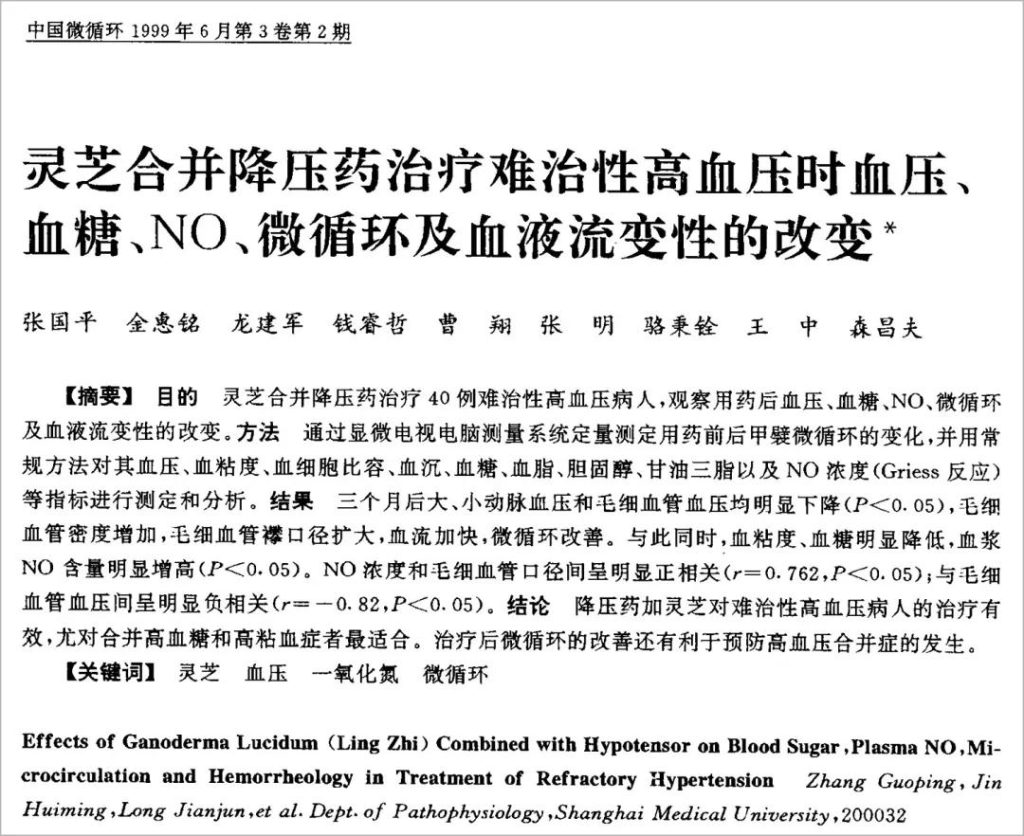
De acordo com o artigo do pesquisador publicado no “Journal of Chinese Microcirculation” em 1999, os “hipertensos refratários” que participaram do teste clínico incluíram pacientes com hipertensão essencial que receberam tratamento com captopril (inibidor da enzima conversora de angiotensina) ou nimodipino (antagonista de cálcio) por mais de um mês, mas a pressão arterial ainda excedeu 140/90 mmHg.
A idade média dos sujeitos foi 57.8 ± 9.6 anos, e a proporção entre homens e mulheres era de cerca de 2:1. Durante o teste, os pacientes que originalmente tomaram a medicina ocidental tomaram a medicina ocidental normalmente. O grupo placebo (13 casos) tomou placebo todos os dias enquanto o grupo Lingzhi (27 casos) pegou 6 Comprimidos Lingzhi todos os dias (contendo 330 mg Lingzhi extrato de água corporal de frutificação), o que equivale a 8.25 g de corpo frutífero Lingzhi; esta dose é 3 vezes maior do que o teste clínico acima mencionado publicado em 1992).
(1) Melhora geral na pressão arterial
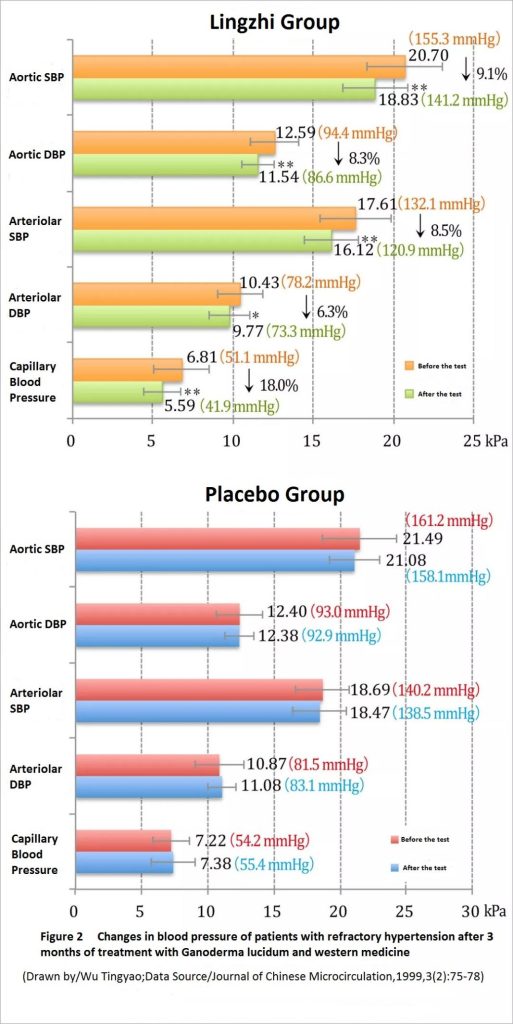
Depois 3 meses de teste, a pressão arterial do grupo Lingzhi, se é pressão arterial aórtica (medindo o braço), pressão arterial arteriolar (medindo o dedo) ou pressão arterial capilar (medindo a dobra ungueal - a dobra cutânea que margeia a borda inferior da unha e cobre a raiz da unha) foram significativamente mais baixos do que antes do teste, mas não houve mudança significativa no grupo placebo (Figura 2).
(2)A viscosidade do sangue também diminuiu
Ao mesmo tempo, os principais indicadores para avaliar a viscosidade do sangue, incluindo alta taxa de cisalhamento (velocidade rápida do fluxo sanguíneo) viscosidade do sangue total, baixa taxa de cisalhamento (velocidade lenta do fluxo sanguíneo) viscosidade do sangue total e viscosidade do plasma que afeta a viscosidade do sangue total (a viscosidade do sangue após a remoção das células sanguíneas, que é afetado pelo conteúdo de proteína, gordura e açúcar no sangue), diminuiu significativamente no grupo Lingzhi enquanto o grupo placebo permaneceu no lugar (Figura 3).


