


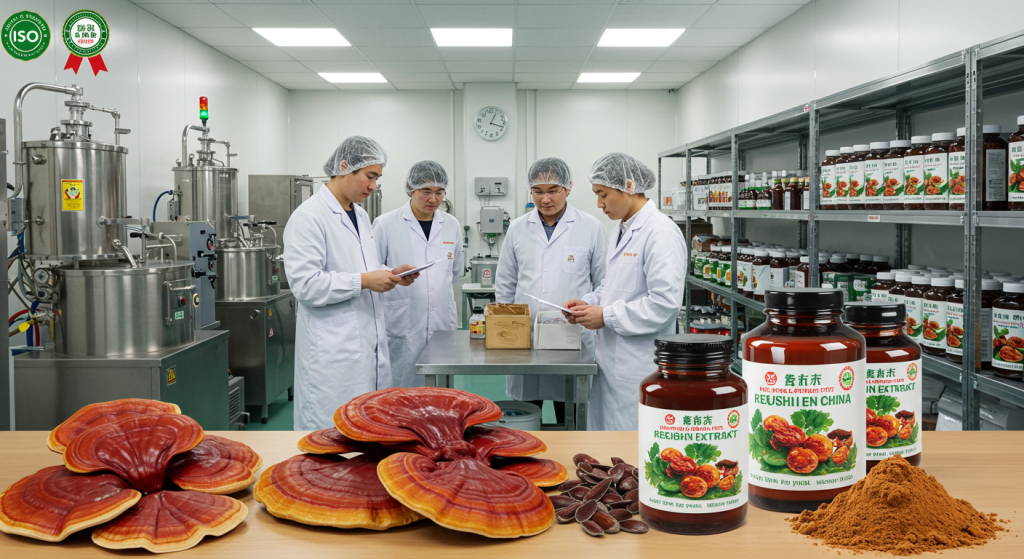
China, o berço da fitoterapia tradicional, stands as the global leader in producing Ganoderma lucidum, comumente conhecido como Reishi ou Lingzhi, muitas vezes reverenciado como o “cogumelo da imortalidade”. Valorizado por seus compostos bioativos – polissacarídeos, beta-glucanos, e triterpenóides – Reishi oferece uma gama de benefícios à saúde, incluindo suporte imunológico, alívio do estresse, e propriedades antioxidantes. As the functional mushroom market is projected to soar to $116.8 bilhão por 2032, China Reishi mushroom extract manufacturers are at the forefront, supplying high-potency extracts for dietary supplements, bebidas funcionais, cosméticos, e mais.
With China accounting for over 94% of global mushroom production, its manufacturers combine centuries-old traditional Chinese medicine (TCM) expertise with cutting-edge technology to meet escalating global demand. This comprehensive guide explores China’s top Reishi extract manufacturers, focusing on both wild and cultivated sources, os benefícios do Reishi apoiados pela ciência, detailed production processes, estratégias de fornecimento, e oportunidades de marca própria. Complete with a comparison table and FAQs, it serves as your definitive roadmap to navigating this thriving industry.
O que é extrato de cogumelo Reishi?
O extrato de cogumelo Reishi é uma forma concentrada de Ganoderma lucidum, derivado do corpo de frutificação ou esporos deste pólipo marrom-avermelhado. Ao contrário do Raw Reishi, que é duro e amargo devido às suas paredes celulares de quitina, extracts are processed to isolate bioactive compounds, ensuring maximum bioavailability for human consumption. The primary compounds include:
- Polissacarídeos: Complex carbohydrates that support immune function and promote gut health by enhancing immune cell activity and nurturing beneficial gut bacteria.
- Beta-glucanos: Polysaccharides that boost immune response by activating macrophages and T-cells, as demonstrated in clinical studies published in journals like *Phytotherapy Research*.
- Triterpenóides: Compounds such as ganoderic acids that provide anti-inflammatory, adaptogenic, and antioxidant effects, aiding stress management and cellular protection.
- Esteróis: Plant-based compounds that contribute to cardiovascular health by supporting healthy cholesterol levels and improving blood circulation.
Produced through methods like hot water, etanol, ou extração dupla, Reishi extracts are standardized to specific bioactive levels (por exemplo, 30% Polissacarídeos) to ensure consistency and potency. China’s manufacturers, leveraging both wild Reishi from regions like Fujian and Yunnan and cultivated Reishi grown under controlled conditions, produce a wide range of products, including powders, cápsulas, chás, tinturas, e Rótulo Privado Reishi Coffee. Wild Reishi, though rare, is particularly prized for its potential higher potency, attributed to the diverse nutrients and environmental stressors of its natural forest ecosystems.
Historical and Cultural Significance of Reishi in China
Reishi’s history in China is profound, spanning over 2,000 years and deeply embedded in traditional Chinese medicine (TCM). O *Shen Nong Ben Cao Jing *, a foundational pharmacopeia from around 200 BCE, describes Reishi as a divine herb capable of promoting longevity, vitalidade, e clareza espiritual. Known as “Lingzhi” (spiritual potency), it was reserved for Chinese emperors and Taoist monks, who used it to enhance meditation, boost physical resilience, and achieve a state of balance and harmony. Na MTC, Reishi was believed to nourish the heart, acalme o espírito, and strengthen the body’s qi (life force). Its scarcity in the wild, growing only on specific hardwood trees in remote forests, made it a luxury commodity, often depicted in art, textiles, and imperial architecture as a symbol of divine favor and prosperity.
In the modern era, Reishi has transcended its cultural origins to become a global wellness icon, amplified by social media platforms and rigorous scientific validation. Posts on Instagram, TikTok, and other platforms with hashtags like #ReishiMushroom, #Lingzhi, and #NaturalHealing highlight its benefits for immunity, dormir, alívio do estresse, e bem-estar geral, resonating with millennials and Gen Z who prioritize holistic, natural health solutions. China’s Reishi extract manufacturers play a pivotal role in preserving this ancient legacy, producing high-quality extracts that honor TCM principles while adhering to contemporary standards of quality, segurança, e sustentabilidade. The allure of wild Reishi, harvested from China’s biodiverse forests, adds a layer of authenticity, appealing to consumers seeking pure, nature-derived remedies.
Why Choose China Reishi Mushroom Extract Manufacturers?
China dominates the global Reishi market, offering unparalleled advantages for sourcing high-quality extracts:
- Global Production Leadership: China accounts for over 94% of the world’s mushroom production, according to 2022 agricultural data, with Reishi being a flagship product due to its cultural and medicinal significance.
- Unmatched TCM Expertise: Centuries of knowledge in TCM ensure that Chinese manufacturers produce extracts with optimal potency, blending traditional wisdom with modern science.
- Access to Wild and Cultivated Sources: China’s diverse ecosystems, such as Fujian’s humid forests and Yunnan’s highlands, provide wild Reishi, while advanced cultivation using organic substrates ensures scalability and consistency.
- Advanced Manufacturing Technology: State-of-the-art facilities employ dual extraction, extração supercrítica de CO2, and rigorous testing to deliver safe, potent extracts that meet global standards.
- Eficiência de custos: Bulk pricing reduces costs to $5–$15 per unit, compared to over $50,000 for establishing in-house production facilities, making it accessible for businesses of all sizes.
- Scalability and Flexibility: Manufacturers accommodate orders from small private label batches (50–500 unidades) to large bulk shipments, supporting startups and established brands alike.
- Sustainability Focus: Practices like Juncao technology, agricultura orgânica, and eco-friendly packaging minimize environmental impact, aligning with consumer demand for sustainable products.
- Conformidade Regulatória: Suppliers provide products and documentation that comply with FDA, UE, and other international regulations, simplifying compliance for global markets.
Science-Backed Health Benefits of Reishi Mushroom Extract
Os benefícios do Reishi para a saúde, deeply rooted in traditional Chinese medicine and increasingly validated by modern science, drive its popularity across a wide range of wellness applications. The key benefits include:
- Suporte ao sistema imunológico: Beta-glucans and polysaccharides enhance the activity of T-cells, macrófagos, e células assassinas naturais, strengthening the body’s defense against pathogens and supporting overall immune resilience, as evidenced in studies published in *Phytotherapy Research*.
- Stress Relief and Mental Clarity: Triterpenóides, como ácidos ganodéricos, act as adaptogens, reduzindo a fadiga, alleviating anxiety, and promoting mental clarity, supported by research on stress-related fatigue in *Journal of Ethnopharmacology*.
- Defesa antioxidante: Reishi’s compounds neutralize free radicals, protecting cells from oxidative damage and supporting longevity, saúde da pele, and cellular integrity, with preclinical studies in *Food Chemistry* suggesting lifespan extension in animal models.
- Efeitos anti-inflamatórios: A modulação das citocinas reduz a inflamação, ajudando a saúde das articulações, muscle recovery, and the management of chronic inflammatory conditions, as demonstrated in research in *Mediators of Inflammation*.
- Saúde Cardiovascular: Triterpenoids and sterols may improve blood circulation, reduce blood pressure, and support healthy cholesterol levels, aligning with TCM uses for vitality, per clinical findings in *Phytomedicine*.
- Saúde intestinal: Prebiotic fibers in Reishi nurture beneficial gut bacteria, enhancing digestion, absorção de nutrientes, and mood regulation through the gut-brain axis, as shown in microbiome studies in *Nutrients*.
- Saúde da pele: The antioxidant and anti-inflammatory properties of Reishi make it a rising star in skincare, reducing redness, promoting hydration, and combating visible signs of aging, as noted in cosmetic research published in *International Journal of Cosmetic Science*.
Wild Reishi, sourced from China’s biodiverse forests, may offer enhanced bioactive potency due to natural environmental stressors like varying temperatures and microbial interactions, though cultivated Reishi provides consistent potency through controlled conditions. The chemical-free nature of wild Reishi ensures these benefits are delivered without contaminants, maximizando a eficácia para aplicações de bem-estar.
Harvesting Wild Reishi in China
Selvagem Ganoderma lucidum grows in China’s humid, forested regions, como Fujian, Yunnan, and Jilin provinces, where it thrives on decaying hardwood trees in shaded, high-moisture environments. Harvesting wild Reishi is a specialized process requiring expertise and sustainability:
- Identification and Expertise: Wild Reishi is identified by its glossy, reddish-brown to dark brown cap, often with a varnished appearance, growing on trees like oak, bordo, or plum. It typically appears in summer and fall, forming fan-shaped or kidney-shaped fruiting bodies. Misidentification with toxic look-alikes, como Ganoderma tsugae, is a risk, requiring expert knowledge or laboratory testing to confirm species authenticity.
- Key Harvesting Locations: Fujian’s Wuyi Mountains, Yunnan’s tropical forests, and Jilin’s Changbai Mountains are prime regions for wild Reishi, known for their rich biodiversity and ideal ecological conditions.
- Sustainable Harvesting Practices: Ethical foragers employ selective harvesting, taking only mature fruiting bodies and leaving younger specimens to ensure regrowth and spore dispersal. They obtain permits, adhere to local regulations, and collaborate with conservation groups to minimize ecological impact, using hand tools to avoid damaging host trees.
- Environmental and Ethical Challenges: The rarity of wild Reishi, combined with increasing global demand, poses risks of overharvesting, which can deplete natural populations and disrupt forest ecosystems. Environmental threats like deforestation and climate change further endanger wild Reishi, making sustainable practices critical. Ethical foragers work with local communities to ensure harvesting supports biodiversity and benefits indigenous economies.
- Certifications for Ethical Sourcing: Certifications like USDA Organic, EU Organic, or FairWild verify sustainable and ethical harvesting, providing transparency for consumers and brands sourcing wild Reishi from China.
Sustainable harvesting is essential to preserve wild Reishi’s availability, protect China’s forest ecosystems, and maintain the ecological balance, ensuring this valuable resource remains viable for future generations.
Production Process of Reishi Mushroom Extract by Chinese Manufacturers
Chinese manufacturers transform wild and cultivated Ganoderma lucidum em potente, bioavailable extracts through a meticulous production process designed to preserve bioactive compounds and ensure safety and quality. The key steps include:
Collection and Cleaning
Harvested wild or cultivated Reishi is carefully cleaned to remove dirt, debris, insetos, or other organic matter, ensuring only high-quality fruiting bodies or spores are used. For wild Reishi, this step is particularly critical due to its exposure to natural forest environments, preventing contamination and maintaining purity.
Secagem
The cleaned Reishi is dried at low temperatures (40–50 ° C.) using advanced infrared or freeze-drying technology to preserve delicate bioactives like beta-glucans, Polissacarídeos, e triterpenóides. This process reduces moisture content to under 10%, ensuring shelf stability without compromising nutritional value or therapeutic potency.
Extração
To unlock Reishi’s bioactives, manufacturers use sophisticated extraction methods to break down the indigestible chitin cell walls, which humans cannot digest. Common techniques include:
- Extração de Água Quente: Boiling water isolates polysaccharides, critical for immune support and gut health.
- Extração de etanol: Alcohol extraction captures triterpenoids, responsible for anti-inflammatory and adaptogenic effects.
- Extração Dupla: Combines both methods to produce full-spectrum extracts, maximizing the range of bioactives, as utilized by leading manufacturers like GanoHerb.
- Extração supercrítica de CO2: A premium, solvent-free method that yields high-purity extracts, often used for specialized products like spore oils or high-potency powders.
Alguns fabricantes, such as Jiangsu Qinshantang, employ a “shellbroken” technique, grinding Reishi spores into ultra-fine powders to significantly enhance absorption and bioavailability, ensuring the extract delivers maximum therapeutic benefits.
Padronização e Testes de Qualidade
Once extracted, the Reishi material is standardized to specific bioactive levels, como 30% polissacarídeos ou 2% triterpenóides, to ensure consistency across batches. Third-party laboratories conduct rigorous testing for heavy metals, pesticidas, micróbios, e resíduos químicos, com certificados de análise (COA) verifying safety and compliance with international standards like those set by the FDA, UE, or China’s CFDA. Teste de DNA confirma autenticidade de Reishi, avoiding adulteration with inferior mushrooms or fillers, as highlighted in a 2017 Nature study that found authenticity issues in some Reishi products. This commitment to quality testing is a hallmark of trusted Chinese manufacturers, ensuring consumer safety and brand reliability.
Fresagem e Embalagem
The extracted material is milled into a fine, uniform powder or processed into other forms (por exemplo, cápsulas, óleos), creating a smooth texture suitable for various applications. The final product is packaged in airtight, light-resistant containers—such as biodegradable pouches, recyclable bottles, or Miron glass jars—to preserve potency and extend shelf life. Eco-friendly packaging aligns with consumer preferences for sustainable products, enhancing the market appeal of the final extract.
Aplicações do Extrato de Cogumelo Reishi
Reishi extract’s versatility makes it a star ingredient across multiple wellness applications, catering to diverse consumer needs and preferences:
- Suplementos alimentares: Capsules or loose powders for daily immune support, alívio do estresse, e bem -estar geral, oferecendo dosagem precisa (por exemplo, 500–1000mg por porção).
- Bebidas funcionais: Chás, tinturas, ou Rótulo Privado Reishi Coffee, blending Reishi’s earthy flavor with health benefits, ideal for relaxation, foco, or sustained energy without caffeine jitters.
- Skincare Products: Soros, máscaras, or creams leveraging Reishi’s antioxidant and anti-inflammatory properties to reduce redness, promote hydration, and combat signs of aging, popular in clean beauty markets.
- Alimentos funcionais: Smoothies, barras energéticas, or snacks infused with Reishi powder for a nutrient boost, appealing to health-focused consumers and DIY wellness enthusiasts.
- Usos Culinários: Added to soups, caldos, or baked goods for a subtle health kick, with its bitterness balanced by complementary flavors like ginger, cúrcuma, or honey.
Essas aplicações destacam a adaptabilidade do Reishi, making it a valuable ingredient for both traditional and innovative wellness products, from health supplements to beauty and culinary creations, with Chinese manufacturers leading the way in product diversity.
Tabela de comparação: Top China Reishi Mushroom Extract Manufacturers
The following table compares leading Chinese Reishi extract manufacturers, highlighting key features to guide sourcing decisions:
| Fabricante | Localização | Certificações | MOQ | Specialization | Private Label Support |
|---|---|---|---|---|---|
| Ganoherb | Fujian | USDA Organic, EU Organic, ISO | 100–500 unidades | Pós, cápsulas, chás | Misturas personalizadas, OEM/ODM |
| Alphay International | Shaanxi | USDA Organic, GMP | 200–1000 units | Suplementos, Alimentos funcionais | Formulation support |
| Xi’an Greena Biotech | Shaanxi | ISO, GMP | 100–500 unidades | Nutracêuticos, cosméticos | Custom packaging, OEM |
| Hangzhou Molai Biotech | Zhejiang | Kosher, Halal, GMP | 50–500 unidades | Pós, extratos | OEM/ODM, quantidade mínima para pedido |
| Jiangsu Qinshantang | Jiangsu | ISO, Halal, Kosher | 100–1000 units | Spore oils, pós | Private label focus |
Top China Reishi Mushroom Extract Manufacturers
China’s Reishi extract manufacturers are global leaders, offering a blend of wild and cultivated Ganoderma lucidum extratos. Below are some of the top manufacturers, renowned for their quality, certificações, e inovação:
- Ganoherb (Fujian): O maior fornecedor de reishi orgânico do mundo, GanoHerb is based in Fujian’s Wuyi Mountains, a biodiversity hotspot. USDA and EU Organic-certified, it uses Juncao technology for sustainable cultivation and sources limited wild Reishi with FairWild certification. GanoHerb offers powders, cápsulas, chás, and spore oils, with low MOQs (100–500 unidades) and full OEM/ODM services for private label brands.
- Alphay International (Shaanxi): A major player sourcing Reishi from the Qinling Mountains, Alphay produces USDA Organic supplements, Alimentos funcionais, e bebidas. It supports cultivation training for farmers and offers private label formulation support, with MOQs of 200–1000 units.
- Xi’an Greena Biotech (Shaanxi): ISO and GMP-certified, Greena Biotech specializes in nutraceuticals and cosmetics, offering high-quality Reishi extracts for global markets. It provides custom packaging and OEM services, with MOQs of 100–500 units, catering to diverse brand needs.
- Hangzhou Molai Biotech (Zhejiang): Kosher, Halal, and GMP-certified, Molai Biotech boasts an annual capacity of 1200+ toneladas, producing powders, extratos, and spore oils. With low MOQs (50–500 unidades) and OEM/ODM services, it’s ideal for startups and private label brands.
- Jiangsu Qinshantang Health Industry (Jiangsu): ISO, Halal, and Kosher-certified, Qinshantang focuses on spore oils and powders, controlling the full supply chain from cultivation to processing. It offers private label focus with MOQs of 100–1000 units, emphasizing quality and innovation.
- Xi’an Aogu Biotech (Shaanxi): A rising supplier offering organic Reishi powders and extracts for supplements and functional beverages, with ISO and organic certifications. It supports private label with competitive pricing and MOQs of 100–500 units.
How to Evaluate China Reishi Extract Manufacturers
Selecting a trusted Chinese Reishi extract manufacturer requires careful evaluation to ensure quality, confiabilidade, e alinhamento com os objetivos da sua marca. Consider these key factors:
- Organic and Ethical Certifications: Verify certifications like USDA Organic, EU Organic, GMP, ISO, or FairWild to ensure chemical-free, sustainably sourced products. For wild Reishi, FairWild certification confirms ethical harvesting practices.
- Testes de terceiros: Solicitar certificados de análise (COA) to confirm bioactive content (por exemplo, 30%+ Polissacarídeos, 2%+ triterpenóides) e segurança contra contaminantes como metais pesados, pesticidas, ou micróbios, ensuring consumer safety and product efficacy.
- Corpo frutífero vs.. Micélio: Priorize extratos corporais frutíferos, which are richer in beta-glucans and other bioactives, over mycelium-grain fillers that dilute potency with starch, como observado em um 2017 Nature study on Reishi authenticity issues.
- Traceability and Transparency: Ensure manufacturers provide farm-to-product or forest-to-product tracking, verifying the origin, cultivo, or harvesting practices, as exemplified by GanoHerb’s transparent supply chain.
- Métodos de extração: Extração dupla (água quente e etanol) garante um espectro completo de bioativos, as used by manufacturers like Xi’an Greena Biotech, while single extraction may limit potency.
- Quantidades mínimas de pedidos (MOQS): Procure por MOQs baixos (50–500 unidades), like those offered by Hangzhou Molai Biotech, to accommodate startups or smaller brands testing the market.
- Customer Support and Services: Choose manufacturers with responsive teams, like Jiangsu Qinshantang, offering guidance on formulations, embalagem, and regulatory compliance to streamline sourcing.
- Reputation and Reliability: Verifique as avaliações, estudos de caso, ou relatórios do setor (por exemplo, Grupo IMARC) para credibilidade, and request product samples to assess quality, Gosto, and texture before committing to bulk orders.
Where to source Reishi extract? Plataformas como o Alibaba, Feito na china, or GanodermaBuy connect you with trusted Chinese manufacturers, ensuring access to high-quality wild and cultivated Reishi extracts for private label or bulk requirements.
Private Label Opportunities with China Reishi Manufacturers
Chinese Reishi extract manufacturers are ideal partners for private label brands, offering a range of benefits to help businesses create unique, produtos prontos para o mercado:
- Formulações personalizadas: Blend Reishi with other functional ingredients, such as Lion’s Mane, Chaga, Cordyceps, or adaptogenic herbs like ashwagandha or ginseng, to create distinctive products tailored to specific consumer needs, such as stress-relief capsules, immunity-boosting teas, or focus-enhancing coffees.
- MOQS baixo: Start with small batches of 50–500 units, as offered by manufacturers like Hangzhou Molai Biotech and Xi’an Aogu Biotech, enabling startups to test the market with minimal financial risk and iterate based on consumer feedback.
- Serviços OEM/ODM: Manufacturers like GanoHerb and Mycotrition provide comprehensive original equipment manufacturing (OEM) and original design manufacturing (ODM) serviços, including custom label design, packaging solutions, and formulation support, streamlining the branding process and reducing time-to-market.
- Altas margens de lucro: With production costs ranging from $5–$15 per unit, private label products can retail at $15–$50, yielding 50–70% profit margins, particularly for organic or wild-sourced Reishi extracts that command premium pricing.
Private label products, such as organic Reishi capsules, chás, ou Rótulo Privado Reishi Coffee, can target specific wellness niches like immunity, relaxamento, mental focus, or beauty, expanding your brand’s market reach and consumer appeal.
Construindo uma marca Reishi de marca própria de sucesso
To create a standout private label Reishi brand using extracts from Chinese manufacturers, consider these strategic approaches:
- Market Positioning: Tailor your products to address specific consumer needs, such as immune support (cápsulas), alívio do estresse (chás), cognitive focus (café), or skin health (soros), to differentiate your brand in a competitive market.
- Branding and Design: Utilize tons terrosos (verdes, marrons, golds) e logotipos minimalistas para evocar bem-estar, pureza, and nature, reflecting Reishi’s TCM heritage. Suppliers like NutraCap Labs or GanoHerb offer professional label design support to create visually appealing, consumer-friendly packaging.
- Storytelling and Authenticity: Highlight Reishi’s 2,000-year history in TCM, its wild or organic sourcing from China’s forests, and sustainable harvesting practices to build consumer trust and foster an emotional connection with your brand.
- Estratégias de marketing: Leverage search engine optimization (SEO) with targeted keywords like Rótulo Privado Reishi, Extrato de cogumelo de Reishi, e organic Lingzhi to improve online visibility. Promote your products on social media platforms like Instagram, TikTok, and X using hashtags (#Reishiwellness, #MushroomPower, #TCMHealing) and collaborate with wellness influencers to amplify reach.
- Marketing de conteúdo: Create engaging blog posts, vídeos, or infographics on Reishi’s health benefits, TCM history, and sustainable sourcing to educate consumers, build brand authority, and drive engagement.
Uma narrativa de marca atraente, combined with eco-friendly packaging and strategic marketing, can position your Reishi products as leaders in the wellness market, appealing to health-conscious and environmentally aware consumers worldwide.
Sustainability Practices in China’s Reishi Extract Production
Leading Chinese Reishi extract manufacturers prioritize eco-friendly practices to align with consumer values and global sustainability trends, ensuring minimal environmental impact:
- Tecnologia Juncao: GanoHerb grows Reishi on grasses instead of hardwood logs, reducing deforestation and preserving China’s forest ecosystems, setting a benchmark for sustainable cultivation.
- Organic Farming Practices: Manufacturers like Alphay International and Xi’an Greena Biotech avoid synthetic pesticides and fertilizers, protegendo a saúde do solo, biodiversity, and water resources while ensuring a chemical-free product.
- Embalagens ecológicas: Bolsas biodegradáveis, recyclable bottles, or Miron glass jars, as used by Jiangsu Qinshantang, minimize waste and appeal to green consumers who prioritize sustainability.
- Water Recycling Systems: Suppliers like Hangzhou Molai Biotech implement water conservation systems to reduce environmental impact, ensuring efficient resource use during production.
- Renewable Energy Integration: Alguns fabricantes, such as Zhejiang Biosan Biotech, utilize solar or other renewable energy sources to power production facilities, lowering their carbon footprint and aligning with global climate goals.
- Ethical Wild Harvesting: For wild Reishi, manufacturers collaborate with local communities and adhere to FairWild standards, using selective harvesting to prevent overexploitation and support biodiversity.
Challenges in Sourcing Reishi Extract from China and Solutions
Sourcing Reishi extract from Chinese manufacturers presents several challenges, but strategic solutions can ensure a smooth and successful process:
- Rarity of Wild Reishi: Wild Reishi is scarce, increasing costs and limiting availability. Solução: Partner with manufacturers like GanoHerb, which offer cultivated Reishi with wild-like potency, ensuring scalability and cost-effectiveness.
- Variabilidade da qualidade: Inconsistent bioactive content or contamination with heavy metals or pesticides can harm brand reputation. Solução: Request product samples and CoAs to verify bioactive content (por exemplo, 30%+ Polissacarídeos, 2%+ triterpenóides) and ensure safety, confirming the absence of contaminants.
- Riscos de colheita excessiva para Reishi Selvagem: A colheita insustentável pode esgotar as populações selvagens e perturbar os ecossistemas. Solução: Fonte de fabricantes com certificações FairWild ou orgânicas, garantindo práticas éticas e sustentáveis, como exemplificado pelo fornecimento selvagem de Reishi da GanoHerb.
- Conformidade regulatória em todos os mercados: As alegações de saúde nos rótulos dos produtos devem estar em conformidade com a FDA, UE, ou outros regulamentos locais para evitar problemas legais. Solução: Trabalhe com fabricantes como Xi’an Greena Biotech ou Jiangsu Qinshantang que fornecem rotulagem e documentação em conformidade com a FDA, simplificando a navegação regulatória.
- Atrasos na cadeia de suprimentos: Transporte e logística globais podem causar atrasos, interrompendo os cronogramas de lançamento de produtos. Solução: Faça parceria com fabricantes que oferecem cronogramas confiáveis de produção e entrega (normalmente 2–4 semanas) and consider regional distributors like GanodermaBuy to minimize delays and ensure timely delivery.
- Language and Communication Barriers: Differences in language or business practices can complicate negotiations. Solução: Engage with manufacturers with strong English-speaking support teams, like GanoHerb or Hangzhou Molai Biotech, or use platforms like Alibaba for streamlined communication.
Global Impact of China’s Reishi Extract Manufacturers
China’s Reishi extract manufacturers are reshaping the global wellness landscape by:
- Meeting Soaring Consumer Demand: Abastecendo um mercado crescente impulsionado por consumidores preocupados com a saúde, com 73% preferring organic products for health and environmental benefits, according to a 2024 Pesquisa NielsenIQ.
- Driving Innovation in Product Development: Developing new formats, such as Reishi-infused skincare, bebidas energéticas, e alimentos funcionais, to cater to evolving consumer preferences and expand market opportunities.
- Supporting Local and Global Economies: Creating jobs and supporting farmers in key cultivation regions like Fujian, Shaanxi, and Zhejiang, while exporting to North America, Europa, e Ásia.
- Promoting Environmental Sustainability: Aligning with global green trends through eco-friendly cultivation, agricultura orgânica, sustainable wild harvesting, and biodegradable packaging, appealing to environmentally conscious buyers.
- Facilitating Global Market Access: Leveraging China’s robust export infrastructure to ensure worldwide distribution, making high-quality Reishi extracts accessible to brands across diverse markets.
Perguntas Frequentes (Perguntas frequentes)
1. What is Reishi mushroom extract?
A concentrated extract from Ganoderma lucidum, rico em polissacarídeos, beta-glucanos, e triterpenóides, usado em suplementos, chás, cafés, e cuidados com a pele.
2. Why source Reishi extract from Chinese manufacturers?
China leads global production (94%+), offers TCM expertise, cost efficiency, escalabilidade, e práticas sustentáveis, ensuring high-quality extracts.
3. What are the health benefits of Reishi extract?
Suporte imunológico, alívio do estresse, defesa antioxidante, Efeitos anti-inflamatórios, saúde cardiovascular, saúde intestinal, e saúde da pele, backed by scientific studies.
4. How is wild Reishi harvested in China?
Ethically from humid forests like Fujian, with permits and selective harvesting to prevent overexploitation, often certified by FairWild.
5. Who are the top Chinese Reishi extract manufacturers?
Ganoherb, Alphay International, Xi’an Greena Biotech, Hangzhou Molai Biotech, and Jiangsu Qinshantang, conhecido pela qualidade e inovação.
Conclusão
da China Fabricantes de extrato de cogumelo Reishi are the backbone of the $116.8 mercado de cogumelos funcionais de bilhões, offering premium wild and cultivated Ganoderma lucidum extracts that blend traditional Chinese medicine with modern innovation. Manufacturers like GanoHerb, Alphay International, Xi’an Greena Biotech, Hangzhou Molai Biotech, and Jiangsu Qinshantang lead the industry, providing high-potency extracts for dietary supplements, chás, Rótulo Privado Reishi Coffee, e produtos para a pele. Com benefícios comprovados pela ciência que vão desde suporte imunológico até alívio do estresse, esses fabricantes capacitam as marcas de bem-estar para atender à crescente demanda global.
Priorizando certificações orgânicas, testes de terceiros, extratos de corpo frutífero, e práticas sustentáveis como a tecnologia Juncão, as empresas podem adquirir com confiança e construir oportunidades competitivas, marcas líderes de mercado. Quer você seja uma startup ou uma empresa estabelecida, a parceria com fabricantes chineses confiáveis é a chave para o sucesso nesta indústria dinâmica. Conecte -se com Ganodermabuy para prêmio Extrato de cogumelo de Reishi, Serviços OEM/ODM, e soluções de marca própria, e liderar a revolução do bem -estar hoje.


