


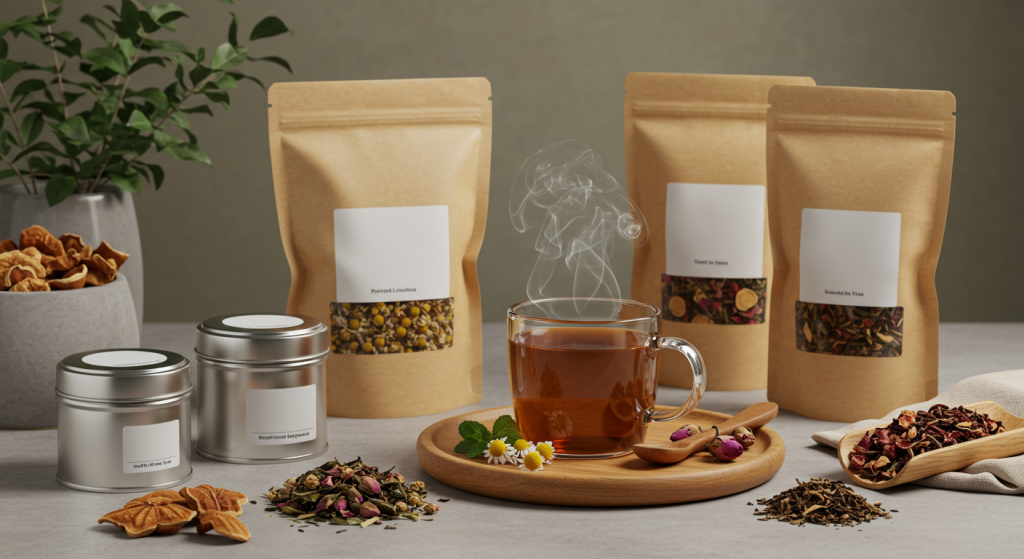
Imagine sipping a warm cup of herbal tea, infused with the ancient power of Ganoderma lucidum (Reishi) or vibrant botanicals like chamomile and peppermint, all under your brand name. Private label herbal tea lets you turn this vision into reality, offering a low-risk, high-reward way to enter the $4.4 billion global tea market, with functional blends like Reishi driving growth. By partnering with a private label supplier, you can focus on branding and marketing while experts handle sourcing, mélange, et emballage. This comprehensive guide walks you through the steps to launch your private label herbal tea business, spotlighting Reishi’s wellness benefits, supplier selection, et pratiques durables. Whether you’re a wellness entrepreneur or a café owner, this is your roadmap to brewing success.
What Is Private Label Herbal Tea?
Private label herbal tea involves partnering with a manufacturer to produce custom or pre-formulated tea blends, which you sell under your brand. Unlike white label (pre-made blends sold to multiple brands), private label offers unique formulations, perfect for creating distinctive Reishi or botanical teas. These blends, often caffeine-free, combine herbs, fruits, épices, and medicinal mushrooms like Reishi, Chaga, ou Crinière de Lion, targeting health-conscious consumers seeking immunity, relaxation, or energy boosts.
Suppliers handle cultivation, mélange, et emballage, allowing you to focus on your brand’s story—whether it’s organic Reishi wellness or vibrant fruit infusions. The global herbal tea market is projected to grow at a 7.6% TCAC à travers 2030, driven by demand for functional beverages, making now the perfect time to launch.
Why Reishi in Herbal Tea?
Reishi, the “mushroom of immortality,” is a star ingredient in private label herbal teas. Used for over 2,000 years in Chinese and Japanese traditions, Ganoderma lucidum is prized for its bioactive compounds—polysaccharides, bêta-glians, and triterpenoids—that offer potential health benefits. C'est terreux, slightly bitter flavor pairs well with herbs like peppermint or licorice, creating balanced, wellness-focused blends. Reishi’s adaptogenic properties make it a magnet for consumers seeking natural remedies, boosting the appeal of your brand.
Benefits of Reishi Herbal Tea
Reishi-infused herbal tea combines wellness with flavor. Below is a table of key benefits, suivi par des idées détaillées:
| Avantage | Description | Soutenu par |
|---|---|---|
| Soutien immunitaire | Améliore la réponse immunitaire avec les bêta-glucanes. | Études sur les cellules immunitaires |
| Soulagement du stress | Favorise le calme comme un adaptogène. | Recherche sur la fatigue |
| Défense antioxydante | Combat les radicaux libres pour la vitalité. | Études sur le stress oxydatif |
| Anti-inflammatoire | Eases inflammation for overall health. | Études de cytokines |
| Santé intestinale | Supports digestion with prebiotic fibers. | Gut microbiome research |
Soutien immunitaire
Reishi’s beta-glucans activate macrophages and T-cells, strengthening immunity. Studies suggest enhanced resilience against pathogens, making Reishi tea a go-to for seasonal wellness.
Soulagement du stress
Triterpenoids in Reishi act as adaptogens, reducing stress and promoting mental clarity. Research on fatigue aligns with its traditional use in meditation, ideal for calming blends.
Défense antioxydante
Reishi’s antioxidants neutralize free radicals, soutenir la santé et la longévité de la peau. Preclinical studies show lifespan benefits, boosting its anti-aging appeal.
Anti-inflammatoire
Le Reishi réduit les cytokines inflammatoires, Aider la santé et le rétablissement conjointes. Studies highlight its role in tissue repair, enhancing overall wellness.
Santé intestinale
Reishi’s prebiotic fibers feed beneficial gut bacteria, supporting digestion and mood. Research suggests gut microbiome benefits, adding depth to its health profile.
Step-by-Step Guide to Launching Your Private Label Herbal Tea
Ready to brew your brand? Follow these steps to find a private label herbal tea supplier and launch your Reishi-infused tea business.
Étape 1: Define Your Brand and Product Vision
Start by envisioning your herbal tea line. Key questions:
- Tea Type: Loose leaf, pyramid sachets, or tea bags? Loose leaf appeals to premium markets, while sachets are convenient.
- Ingrédients: Focus on Reishi, or blend with herbs like chamomile, gingembre, or rosehips? Functional blends (Par exemple, immunité, relaxation) are trending.
- Public cible: Wellness seekers, millennials, or eco-conscious consumers? Younger demographics (25–34) prefer herbal blends over black tea.
- Conditionnement: Eco-friendly tins, pochettes biodégradables, or gift boxes? Custom labels with vibrant designs attract attention.
- Price Point: Budget ($5–10 per tin) or premium ($15–30)? Reishi’s health appeal justifies higher prices.
Action: Write a product brief outlining your blend (Par exemple, Reishi-peppermint for relaxation), conditionnement, and brand story (Par exemple, “Pure wellness from nature”). Study brands like Four Sigmatic for inspiration.
Étape 2: Choose Private Label vs. Marque blanche
Decide between:
- Marque privée: Custom blends exclusive to your brand, like a Reishi-lavender tea. MOQ plus élevés (100–1 000 unités) but unique market positioning.
- Marque blanche: Pre-made blends sold to multiple brands. Lower MOQs (50–100 unités) and costs, ideal for testing markets.
For Reishi tea, private label is best for creating a standout wellness brand, but white label suits startups with limited budgets. Suppliers like Caraway Tea offer both options.
Étape 3: Find Private Label Herbal Tea Suppliers
Search for suppliers specializing in herbal and mushroom teas. Sources include:
- Annuaires en ligne: Thomasnet, Alibaba, or Wonnda list suppliers like Floralpina (Europe) or GanoHerb (Chine).
- Salons professionnels: Attend Natural Products Expo or Tea & Coffee World Cup to meet suppliers and sample Reishi blends.
- Réseautage: Join tea industry forums or LinkedIn groups for recommendations from wellness brands.
- Google: Search “private label Reishi herbal tea supplier” or “organic herbal tea manufacturer.”
Top Suppliers:
- Caraway Tea (USA): Offers organic Reishi blends, custom formulations, and biodegradable pyramid sachets. Low MOQs for startups.
- GanoHerbe (Chine): Le plus grand fournisseur mondial de Ganoderma biologique, specializing in Reishi teas. Certifié biologique USDA.
- Harris Tea (USA): Largest private label tea manufacturer, with GFSI-certified facilities in Georgia and New Jersey.
- The Tea Can Company (USA): Premium herbal blends with custom cans, ideal for branding.
- Tiesta Tea (USA): 30+ organic blends, including Reishi, with 25-pound bulk options.
GanodermaBuy partners with similar suppliers, offering Reishi teas from organic, des sources de qualité.
Étape 4: Evaluate Supplier Quality
Assess suppliers to ensure they meet your standards:
- Certification biologique: USDA Organic or EU Organic for Reishi and herbs, ensuring no pesticides.
- Méthodes d'extraction: Double extraction (eau chaude et éthanol) for Reishi to capture polysaccharides and triterpenoids.
- Essai: Third-party labs for heavy metals, pesticides, et microbes. Demander des CoA.
- Personnalisation: Can they create a Reishi-chamomile blend or match a specific flavor profile? Caraway Tea excels here.
- MOQ: MOQ faibles (50–100 unités) pour les startups. The Tea Spot offers flexible minimums.
- Options d'emballage: Biodegradable sachets, tins, or pouches. Harris Tea packs square, round, or pyramid bags.
- Durabilité: Juncao technology or eco-packaging, comme les pratiques vertes de GanoHerb.
Action: Request samples from 3–5 suppliers to compare Reishi potency, saveur, et emballage. Test for taste and solubility.
Étape 5: Request Quotes and Negotiate
Contact suppliers with your product brief for quotes. Key questions:
- Cost per unit (Par exemple, $0.50–$2 per sachet, $5–$15 per tin)?
- Setup fees for custom blends or labels?
- MOQ and bulk discounts?
- Production and shipping timelines (2–6 weeks typical)?
- Dropshipping or direct-to-customer options?
Negotiate for lower MOQs or better pricing for initial orders. Ensure contracts cover quality guarantees, delivery schedules, and exclusivity for custom blends. Suppliers like Custom Co-Pak assign dedicated reps to guide you.
Étape 6: Design Your Brand
Your brand is your story. Create a compelling identity:
- Logo and Labels: Use vibrant designs reflecting wellness (Par exemple, earthy greens for Reishi). Suppliers like The Tea Can Company offer label templates or design services.
- Brand Story: Highlight Reishi’s benefits—e.g., “Pure calm in every sip.” Emphasize organic and sustainable sourcing.
- Conditionnement: Choose eco-friendly options like biodegradable pouches or recyclable tins to appeal to green consumers.
Action: Use Canva or hire a designer for labels. Suppliers may provide InDesign files for custom packaging.
Étape 7: Test and Launch
Before scaling, test your product:
- Exemple de commentaires: Share with friends, famille, or focus groups to refine blends or packaging.
- Lancement en douceur: Sell 50–100 units via Shopify, Etsy, or local markets to gauge demand.
- Commercialisation: Promote on Instagram or TikTok with #ReishiTea or #HerbalWellness. Share Reishi’s health story to engage customers.
Ajuster en fonction des commentaires, then order larger batches. Suppliers like Dripshipper integrate with Shopify for seamless fulfillment.
Étape 8: Scale and Partner Long-Term
Build a lasting relationship with your supplier:
- Communicate regularly about inventory and trends (Par exemple, adding Lion’s Mane).
- Negotiate better terms as orders grow.
- Explore new formats, like iced Reishi tea, pour élargir votre gamme.
Suppliers like Tiesta Tea support scaling with bulk options and R&Expertise D.
Défis et solutions
- MOQ élevés: Choose suppliers like Lifetime Tea with low minimums for startups.
- Cost Margins: Private label teas cost $5–$15 per unit; premium branding justifies $20–$40 retail prices.
- Contrôle de qualité: Request samples and CoAs to ensure Reishi potency and herb quality.
- Règlements: Ensure FDA or local compliance for health claims. Suppliers like Harris Tea handle labeling compliance.
Sustainability in Private Label Herbal Tea
Top suppliers prioritize eco-friendly practices:
- Technologie Juncao: GanoHerb cultive du Reishi sur des graminées, réduction de la déforestation.
- Agriculture biologique: Évite les produits chimiques synthétiques, as seen with Caraway Tea’s estates.
- Écos-emballage: Biodegradable sachets or recyclable tins, like The Tea Can Company’s options.
Choosing sustainable suppliers via GanodermaBuy aligns your brand with green values, attracting eco-conscious consumers.
Who’s Your Target Market?
Private label Reishi herbal tea appeals to:
- Chercheurs de bien-être: Chasing immune and stress-relief benefits.
- Millennials: 48% of 25–34-year-olds prefer herbal blends.
- Acheteurs éco-conscients: Valuing organic and sustainable products.
- Café Owners: Adding unique teas to menus.
Tailor your branding to these groups for maximum impact.
Cost and Profit Potential
Startup costs range from $1,000–$5,000 for 50–200 units, including samples, labels, et marketing. Retail prices of $10–$40 per tin yield 50–70% margins, with premium Reishi blends commanding higher prices. Suppliers like Special Tea Company suggest starting with multiple small batches to test best-sellers, minimizing inventory risk.
Questions fréquemment posées (FAQ)
1. What’s private label herbal tea?
Custom or pre-formulated teas sold under your brand, produced by a supplier handling blending and packaging.
2. Why include Reishi?
Reishi adds immune, soulagement du stress, et bienfaits antioxydants, appealing to wellness consumers.
3. Combien ça coûte pour commencer?
$1,000–$5,000 for initial orders, labels, et marketing, en fonction des MOQ et de la personnalisation.
4. Where do I find suppliers?
Use Thomasnet, Alibaba, ou salons professionnels. Try Caraway Tea, GanoHerbe, or Harris Tea for Reishi blends.
5. Is it safe?
Reishi is generally safe but may cause mild digestive upset or interact with blood thinners. Consult a doc if on meds.
6. How long to launch?
1–3 months, du sourcing au soft launch, with suppliers like The Tea Spot streamlining production.
Conclusion
Launching a private label herbal tea brand with Reishi is your chance to ride the wellness wave, offering consumers a sip of health and harmony. From defining your Reishi-chamomile blend to partnering with organic suppliers like Caraway Tea or GanoHerb, this guide equips you to build a standout brand. Avec des pratiques durables, faibles MOQ, and a market hungry for functional teas, now’s the time to brew your success. Start your journey with trusted sources like Ganodermabuy and let your Reishi-infused herbal tea captivate the world.


