


This article is reproduced from the 97th issue of “Ganoderma” magazine in 2023, published with author’s permission. All rights to this article belong to the author.
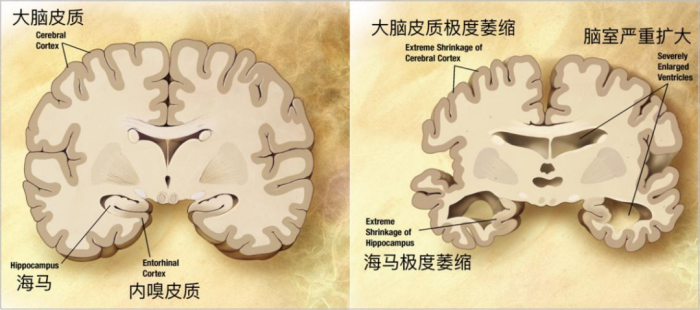
A significant difference can be observed in the brain between a healthy individual (izquierda) and an Alzheimer’s disease patient (bien).
(Fuente de la imagen: Wikimedia Commons)
Alzheimer’s disease (ANUNCIO), commonly known as senile dementia, is a progressive neurodegenerative disorder characterized by age-related cognitive impairment and memory loss. With the increase in human lifespan and population aging, the prevalence of Alzheimer’s disease is steadily rising, posing a significant burden on families and society. Por lo tanto, exploring multiple approaches to prevent and treat Alzheimer’s disease has become a topic of great research interest.
In my article titled “Exploring the Research on Ganoderma for Preventing and Treating Alzheimer’s Disease,” published in the 83rd issue of “Ganoderma” magazine in 2019, I introduced the pathogenesis of Alzheimer’s disease and the pharmacological effects of Ganoderma lucidum in preventing and treating Alzheimer’s disease. Specifically, Ganoderma lucidum extractos, Ganoderma lucidum polisacáridos, Ganoderma lucidum triterpenos, y Ganoderma lucidum spore powder were found to improve learning and memory impairments in Alzheimer’s disease rat models. These components also exhibited protective effects against degenerative neuropathological changes in the hippocampal brain tissue of the Alzheimer’s disease rat models, reduced neuroinflammation in brain tissues, increased the activity of superoxide dismutase (CÉSPED) in the hippocampal brain tissue, decreased the levels of malondialdehyde (MDA) as an oxidative product, and demonstrated preventive and therapeutic effects in experimental animal models of Alzheimer’s disease.
The two preliminary clinical studies on Ganoderma lucidum for preventing and treating Alzheimer’s disease, introduced in the article, have not definitively confirmed the effectiveness of Ganoderma lucidum in Alzheimer’s disease. Sin embargo, combined with numerous promising pharmacological research findings, they provide hope for further clinical studies.
The effect of usingGanoderma lucidum spore powder alone to treat Alzheimer’s disease is not obvious.
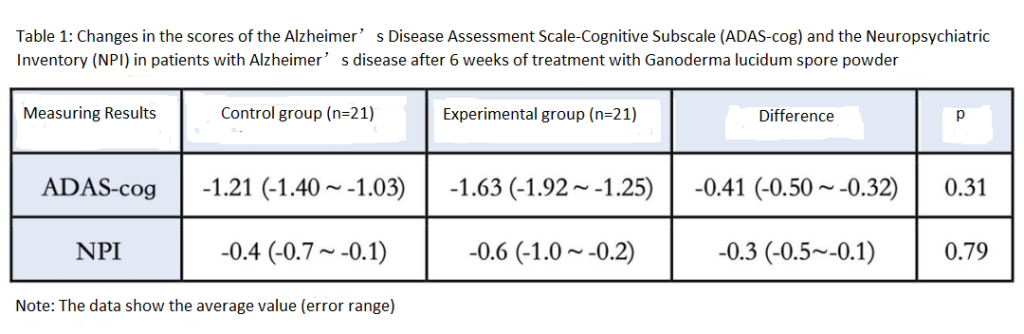
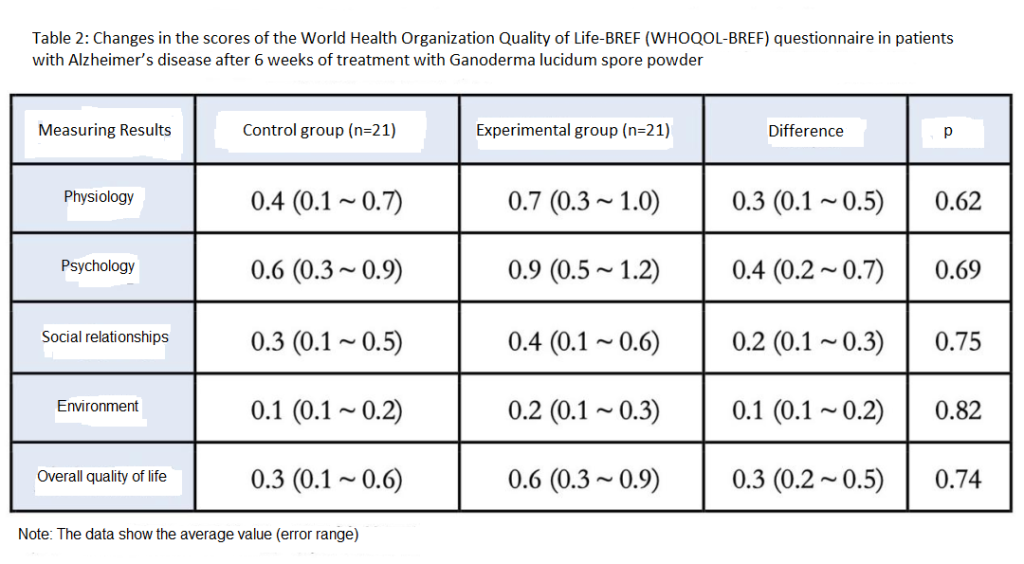
Reviewing the research paper titled “Spore powder of Ganoderma lucidum for the treatment of Alzheimer’s disease: A pilot study” published in the journal “Medicine” [1], the authors randomly divided 42 patients who met the diagnostic criteria for Alzheimer’s disease into an experimental group and a control group, con 21 patients in each group. The experimental group received oral administration of Ganoderma lucidum spore powder capsules (SPGL group) a una dosis de 4 cápsulas (250 mg each capsule) three times a day while the control group only received placebo capsules. Both groups underwent a 6-week treatment.
At the end of the treatment, compared to the control group, the SPGL group showed a reduction in scores for the Alzheimer’s Disease Assessment Scale-Cognitive Subscale (ADAS-cog) and the Neuropsychiatric Inventory (NPI), indicating an improvement in cognitive and behavioral impairments, but the differences were not statistically significant (Mesa 1). The World Health Organization Quality of Life-BREF (WHOQOL-BREF) questionnaire showed an increase in life quality scores, indicating an improvement in life quality, but again, the differences were not statistically significant (Mesa 2). Both groups experienced mild adverse reactions, with no significant differences.
The authors of the paper believe that the treatment of Alzheimer’s disease with Ganoderma lucidum spore powder capsules for 6 weeks did not show significant therapeutic effects, possibly due to the short duration of treatment. Future clinical trials with large sample sizes and longer treatment durations are needed to gain a clearer understanding of the clinical efficacy of Ganoderma lucidum spore powder capsules in the treatment of Alzheimer’s disease.
The combined use ofGanoderma lucidum spore powder with conventional treatment drugs significantly improves the therapeutic efficacy in treating Alzheimer’s disease.
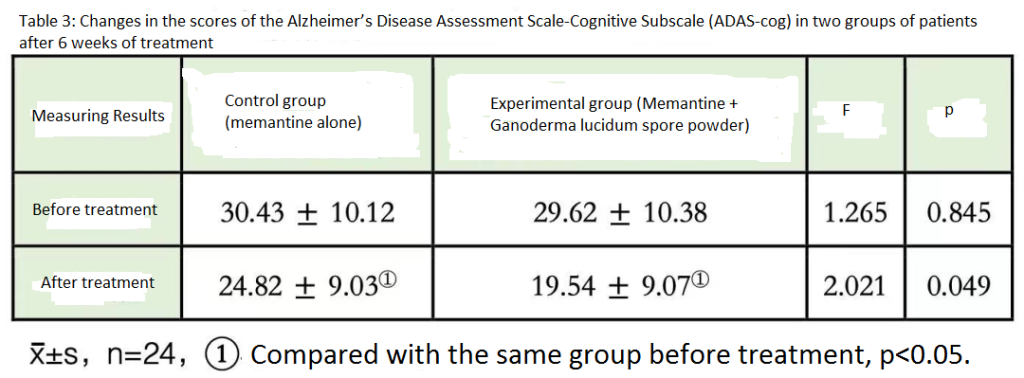
Recientemente, a study evaluated the combined effects of Ganoderma lucidum spore powder and the Alzheimer’s disease medication memantine on cognition and quality of life in patients with mild to moderate Alzheimer’s disease [2]. Forty-eight patients diagnosed with Alzheimer’s disease, viejo 50 Para 86 años, were randomly divided into a control group and an experimental group, con 24 patients in each group (n=24).
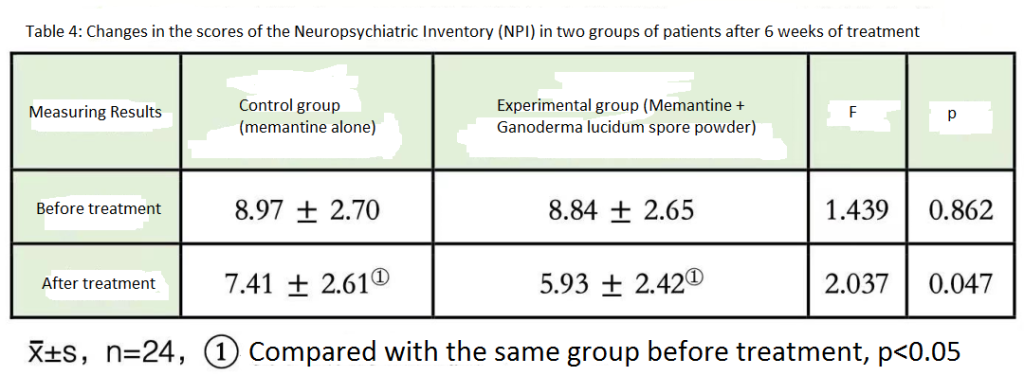
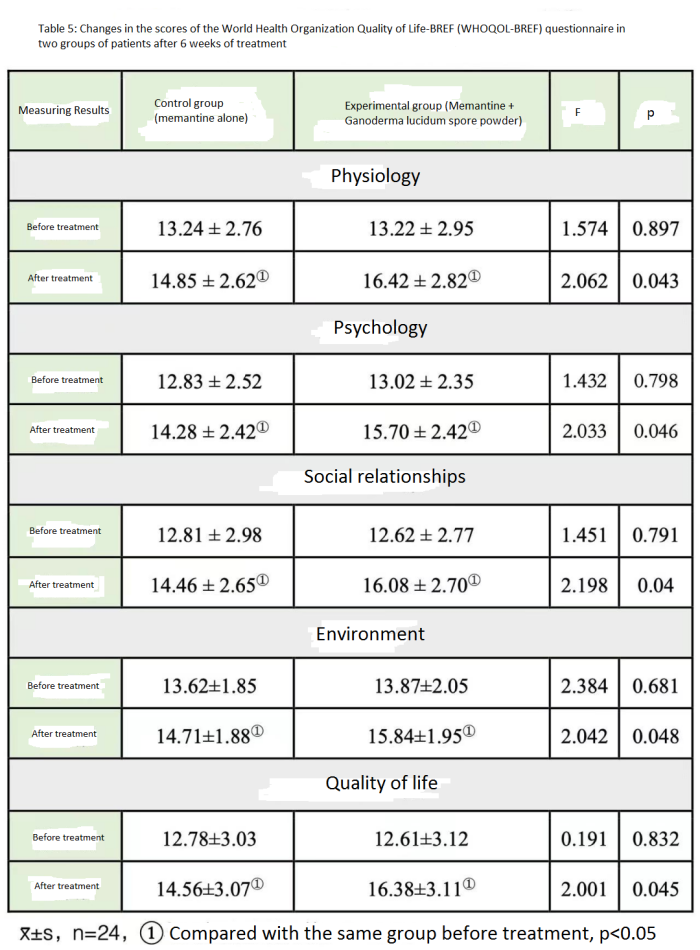
Prior to treatment, there were no statistically significant differences between the two groups in terms of gender, dementia degree, ADAS-cog, NPI, and WHOQOL-BREF scores (P>0.5). The control group received memantine capsules at a dose of 10 mg, twice a day, while the experimental group received the same dose of memantine along with Ganoderma lucidum spore powder capsules (SPGL) a una dosis de 1000 mg, three times a day. Both groups were treated for 6 Semanas, and the basic data of the patients were recorded. The cognitive function and quality of life of the patients were assessed using the ADAS-cog, NPI, and WHOQOL-BREF scoring scales.
Después del tratamiento, both groups of patients showed a significant reduction in ADAS-cog and NPI scores compared to before treatment. Además, the experimental group had significantly lower ADAS-cog and NPI scores than the control group, with statistically significant differences (PAG<0.05) (Mesa 3, Mesa 4). Following treatment, both groups of patients demonstrated a significant increase in scores for physiology, psychology, social relationships, ambiente, and overall quality of life in the WHOQOL-BREF questionnaire compared to before treatment. Además, the experimental group had significantly higher WHOQOL-BREF scores than the control group, with statistically significant differences (PAG<0.05) (Mesa 5).
Memantine, known as a novel N-methyl-D-aspartate (NMDA) receptor antagonist, can non-competitively block NMDA receptors, thereby reducing glutamic acid-induced NMDA receptor overexcitation and preventing cell apoptosis. It improves cognitive function, behavioral disorder, activities of daily living, and dementia severity in patients with Alzheimer’s disease. It is used for the treatment of mild, moderado, and severe Alzheimer’s disease. Sin embargo, the use of this medication alone still has limited benefits for patients with Alzheimer’s disease.
The results of this study show that the combined application of Ganoderma lucidum spore powder and memantine can enhance patients’ behavioral and cognitive abilities and significantly improve their quality of life.
Choosing the right medication approach is crucial for treating Alzheimer’s disease.
In the above two randomized controlled clinical trials of Ganoderma lucidum spore powder for the treatment of Alzheimer’s disease, the selection of cases, diagnosis, source of Ganoderma lucidum spore powder, dosage, course of treatment, and efficacy evaluation indicators were the same, but the clinical efficacy was different. After statistical analysis, el uso de Ganoderma lucidum spore powder alone to treat Alzheimer’s disease showed no significant improvement in AS-cog, NPI, and WHOQOL-BREF scores compared to placebo; sin embargo, the combined use of Ganoderma lucidum spore powder and memantine showed significant improvement in the three scores compared to memantine alone, eso es, the combined use of Ganoderma lucidum spore powder and memantine can significantly improve the behavioral ability, cognitive ability and quality of life of patients with Alzheimer’s disease.
Actualmente, the drugs used to treat Alzheimer’s disease, such as donepezil, rivastigmine, memantine, and galantamine (Reminyl), have limited therapeutic effects and can only alleviate symptoms and delay the course of the disease. Además, almost no new drugs for the treatment of Alzheimer’s disease have been successfully developed in the past 20 años. Por lo tanto, el uso deGanoderma lucidum spore powder to enhance the efficacy of drugs for the treatment of Alzheimer’s disease should be given attention.
As for further clinical trials of using Ganoderma lucidum spore powder alone, it may be possible to consider increasing the dosage, Por ejemplo, 2000 mg each time, twice a day, for a course of at least 12 Semanas. Whether this is feasible, we look forward to research results in this area to tell us the answer.
[Referencias]
1. Guo-hui Wang, et al. Spore powder ofGanoderma lucidum for the treatment of Alzheimer disease: Un estudio piloto. Medicine(Baltimore). 2018;97(19): e0636.
2. Wang Lichao, et al. The effect of memantine combined withGanoderma lucidum spore powder on cognition and quality of life in patients with Alzheimer’s disease. Journal of Armed Police Medical College (Medical Edition). 2019, 28(12): 18-21.
Introducción al profesor Lin Zhibin

Señor. Lin Zhibin, a pioneer in Ganoderma research in China, ha dedicado casi medio siglo al campo. Ocupó varios cargos en la Universidad Médica de Beijing., incluido el vicepresidente, Vicedecano de la Escuela de Medicina Básica, Director del Instituto de Ciencias Médicas Básicas, and Director of the Department of Pharmacology. He is now a professor in the Department of Pharmacology at Peking University School of Basic Medical Sciences. De 1983 Para 1984, Fue académico visitante en el Centro de Investigación de Medicina Tradicional de la OMS en la Universidad de Illinois en Chicago.. De 2000 Para 2002, fue profesor visitante en la Universidad de Hong Kong. Ya que 2006, Ha sido profesor honorario de la Academia Farmacéutica Estatal de Perm en Rusia..
Ya que 1970, Ha utilizado métodos científicos modernos para estudiar los efectos y mecanismos farmacológicos de la medicina tradicional china. Ganoderma y sus ingredientes activos. Ha publicado más de cien artículos de investigación sobre Ganoderma.. De 2014 Para 2019, fue seleccionado para la lista de investigadores altamente citados de China de Elsevier durante seis años consecutivos.
Ha escrito muchos libros sobre Ganoderma., incluyendo “Investigación moderna sobre Ganoderma”(1st-4th editions), ”Lingzhi from Mystery to Science”(1st-3rd editions), “Ganoderma apoya la energía saludable y disipa los factores patógenos., ayudando en el tratamiento de tumores”, “Discussions on Ganoderma”, and “Ganoderma and Health”.


