


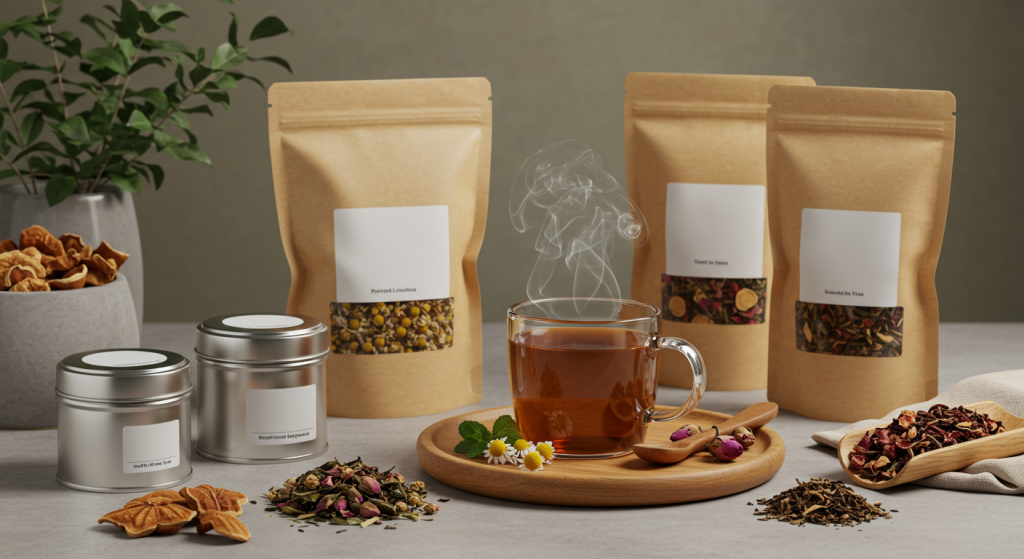
Imagina beber una copa cálida de té de hierbas, infused with the ancient power of Ganoderma lucidum (Reishi) o botánicos vibrantes como la manzanilla y la menta, Todo bajo tu marca. El té de hierbas de etiqueta privada te permite convertir esta visión en realidad, ofreciendo un bajo riesgo, forma alta de ingresar al $4.4 Billion Global Tea Market, with functional blends like Reishi driving growth. Al asociarse con un proveedor de marca privada, you can focus on branding and marketing while experts handle sourcing, mezcla, y embalaje. This comprehensive guide walks you through the steps to launch your private label herbal tea business, spotlighting Reishi’s wellness benefits, selección de proveedores, y prácticas sustentables. Whether you’re a wellness entrepreneur or a café owner, this is your roadmap to brewing success.
What Is Private Label Herbal Tea?
Private label herbal tea involves partnering with a manufacturer to produce custom or pre-formulated tea blends, which you sell under your brand. A diferencia de la etiqueta blanca (pre-made blends sold to multiple brands), private label offers unique formulations, perfect for creating distinctive Reishi or botanical teas. These blends, often caffeine-free, combine herbs, frutas, especias, and medicinal mushrooms like Reishi, Chaga, o melena de león, Dirigido a consumidores preocupados por su salud que buscan inmunidad., relajación, or energy boosts.
Suppliers handle cultivation, mezcla, y embalaje, allowing you to focus on your brand’s story—whether it’s organic Reishi wellness or vibrant fruit infusions. The global herbal tea market is projected to grow at a 7.6% CAGR a través de 2030, driven by demand for functional beverages, making now the perfect time to launch.
Why Reishi in Herbal Tea?
Reishi, the “mushroom of immortality,” is a star ingredient in private label herbal teas. Used for over 2,000 años en las tradiciones china y japonesa, Ganoderma lucidum is prized for its bioactive compounds—polysaccharides, beta-glucanos, and triterpenoids—that offer potential health benefits. es terroso, slightly bitter flavor pairs well with herbs like peppermint or licorice, creating balanced, wellness-focused blends. Reishi’s adaptogenic properties make it a magnet for consumers seeking natural remedies, boosting the appeal of your brand.
Benefits of Reishi Herbal Tea
Reishi-infused herbal tea combines wellness with flavor. Below is a table of key benefits, seguido de ideas detalladas:
| Beneficio | Descripción | Apoyado por |
|---|---|---|
| Soporte inmune | Mejora la respuesta inmune con betaglucanos.. | Immune cell studies |
| Alivio del estrés | Promueve la calma como un adaptógeno. | Fatigue research |
| Defensa antioxidante | Lucha contra los radicales libres para obtener vitalidad.. | Estudios de estrés oxidativo. |
| Antiinflamatorio | Alivia la inflamación para la salud general.. | Cytokine studies |
| Salud intestinal | Apoya la digestión con fibras prebióticas.. | Gut microbiome research |
Soporte inmune
Reishi’s beta-glucans activate macrophages and T-cells, fortalecer la inmunidad. Studies suggest enhanced resilience against pathogens, making Reishi tea a go-to for seasonal wellness.
Alivio del estrés
Triterpenoids in Reishi act as adaptogens, reducir el estrés y promover la claridad mental. Research on fatigue aligns with its traditional use in meditation, ideal for calming blends.
Defensa antioxidante
Los antioxidantes del Reishi neutralizan los radicales libres, apoyando la salud y la longevidad de la piel. Preclinical studies show lifespan benefits, potenciando su atractivo antienvejecimiento.
Antiinflamatorio
Reishi reduce las citoquinas inflamatorias, Ayudar a la salud y recuperación de las articulaciones. Studies highlight its role in tissue repair, mejorar el bienestar general.
Salud intestinal
Reishi’s prebiotic fibers feed beneficial gut bacteria, apoyando la digestión y el estado de ánimo. Research suggests gut microbiome benefits, agregando profundidad a su perfil de salud.
Step-by-Step Guide to Launching Your Private Label Herbal Tea
Listo para elaborar tu marca? Follow these steps to find a private label herbal tea supplier and launch your Reishi-infused tea business.
Paso 1: Defina su marca y visión de producto
Start by envisioning your herbal tea line. Key questions:
- Tea Type: hoja suelta, sobres piramidales, or tea bags? Las hojas sueltas atraen a los mercados premium, while sachets are convenient.
- Ingredientes: Focus on Reishi, or blend with herbs like chamomile, jengibre, o escaramujos? Mezclas funcionales (P.EJ., inmunidad, relajación) son tendencia.
- Público objetivo: Wellness seekers, millennials, or eco-conscious consumers? Younger demographics (25–34) prefer herbal blends over black tea.
- Embalaje: Eco-friendly tins, bolsas biodegradables, o cajas de regalo? Custom labels with vibrant designs attract attention.
- Punto de precio: Presupuesto ($5–10 por lata) o prima ($15–30)? Reishi’s health appeal justifies higher prices.
Acción: Write a product brief outlining your blend (P.EJ., Reishi-peppermint for relaxation), embalaje, e historia de la marca (P.EJ., “Pure wellness from nature”). Study brands like Four Sigmatic for inspiration.
Paso 2: Elija etiqueta privada vs.. Etiqueta blanca
Decide between:
- Etiqueta privada: Mezclas personalizadas exclusivas de tu marca., like a Reishi-lavender tea. MOQ más altos (100–1.000 unidades) but unique market positioning.
- Etiqueta blanca: Mezclas prefabricadas vendidas a múltiples marcas.. MOQ más bajos (50–100 unidades) y costos, ideal for testing markets.
For Reishi tea, private label is best for creating a standout wellness brand, pero la marca blanca se adapta a las empresas emergentes con presupuestos limitados. Suppliers like Caraway Tea offer both options.
Paso 3: Find Private Label Herbal Tea Suppliers
Search for suppliers specializing in herbal and mushroom teas. Las fuentes incluyen:
- Directorios en línea: Thomasnet, Alibaba, or Wonnda list suppliers like Floralpina (Europa) or GanoHerb (Porcelana).
- Ferias comerciales: Attend Natural Products Expo or Tea & Coffee World Cup to meet suppliers and sample Reishi blends.
- Redes: Join tea industry forums or LinkedIn groups for recommendations from wellness brands.
- Google: Search “private label Reishi herbal tea supplier” or “organic herbal tea manufacturer.”
Principales proveedores:
- Té de alcaravea (EE.UU): Offers organic Reishi blends, formulaciones personalizadas, and biodegradable pyramid sachets. MOQ bajos para startups.
- Ganoherb (Porcelana): El mayor proveedor de Ganoderma orgánico del mundo, specializing in Reishi teas. USDA Organic certified.
- Té Harris (EE.UU): Largest private label tea manufacturer, with GFSI-certified facilities in Georgia and New Jersey.
- The Tea Can Company (EE.UU): Premium herbal blends with custom cans, ideal for branding.
- Tiesta Tea (EE.UU): 30+ organic blends, incluyendo Reishi, with 25-pound bulk options.
GanodermaBuy se asocia con proveedores similares, offering Reishi teas from organic, high-standard sources.
Paso 4: Evaluate Supplier Quality
Assess suppliers to ensure they meet your standards:
- Certificación orgánica: USDA Organic u EU Organic para Reishi y hierbas, asegurando que no haya pesticidas.
- Métodos de extracción: Extracción dual (agua caliente y etanol) for Reishi to capture polysaccharides and triterpenoids.
- Pruebas: Laboratorios de terceros para metales pesados, pesticidas, y microbios. Solicitar CoA.
- Personalización: Can they create a Reishi-chamomile blend or match a specific flavor profile? Caraway Tea excels here.
- Moqs: MOQS bajo (50–100 unidades) para startups. The Tea Spot offers flexible minimums.
- Opciones de embalaje: Sobres biodegradables, latas, o bolsas. Harris Tea packs square, round, or pyramid bags.
- Sostenibilidad: Tecnología Juncao o ecoenvases, como las prácticas verdes de GanoHerb.
Acción: Solicite muestras de entre 3 y 5 proveedores para comparar la potencia del Reishi, sabor, y embalaje. Test for taste and solubility.
Paso 5: Solicitar Cotizaciones y Negociar
Póngase en contacto con los proveedores con el resumen de su producto para obtener cotizaciones.. Key questions:
- Costo por unidad (P.EJ., $0.50–$2 por sobre, $5–$15 por lata)?
- Tarifas de configuración para mezclas o etiquetas personalizadas?
- MOQ y descuentos por volumen?
- Plazos de producción y envío. (2–6 weeks typical)?
- Opciones de dropshipping o directo al cliente?
Negotiate for lower MOQs or better pricing for initial orders. Ensure contracts cover quality guarantees, horarios de entrega, y exclusividad para mezclas personalizadas. Suppliers like Custom Co-Pak assign dedicated reps to guide you.
Paso 6: Diseña tu marca
Your brand is your story. Create a compelling identity:
- Logotipo y etiquetas: Use vibrant designs reflecting wellness (P.EJ., earthy greens for Reishi). Suppliers like The Tea Can Company offer label templates or design services.
- Historia de la marca: Highlight Reishi’s benefits—e.g., “Pure calm in every sip.” Emphasize organic and sustainable sourcing.
- Embalaje: Choose eco-friendly options like biodegradable pouches or recyclable tins to appeal to green consumers.
Acción: Usa Canva o contrata a un diseñador para las etiquetas. Suppliers may provide InDesign files for custom packaging.
Paso 7: Prueba y lanzamiento
Before scaling, test your product:
- Comentarios de muestra: Share with friends, familia, or focus groups to refine blends or packaging.
- Lanzamiento suave: Vender de 50 a 100 unidades a través de Shopify, Etsy, o mercados locales para medir la demanda.
- Marketing: Promote on Instagram or TikTok with #ReishiTea or #HerbalWellness. Comparta la historia de salud del Reishi para atraer a los clientes.
Ajustar según los comentarios, luego ordene lotes más grandes. Suppliers like Dripshipper integrate with Shopify for seamless fulfillment.
Paso 8: Scale and Partner Long-Term
Build a lasting relationship with your supplier:
- Communicate regularly about inventory and trends (P.EJ., adding Lion’s Mane).
- Negociar mejores condiciones a medida que aumentan los pedidos.
- Explora nuevos formatos, como té helado de Reishi, para ampliar tu línea.
Suppliers like Tiesta Tea support scaling with bulk options and R&D experiencia.
Desafíos y soluciones
- MOQS altos: Choose suppliers like Lifetime Tea with low minimums for startups.
- Márgenes de costo: Private label teas cost $5–$15 per unit; premium branding justifies $20–$40 retail prices.
- Control de calidad: Request samples and CoAs to ensure Reishi potency and herb quality.
- Regulaciones: Ensure FDA or local compliance for health claims. Suppliers like Harris Tea handle labeling compliance.
Sustainability in Private Label Herbal Tea
Top suppliers prioritize eco-friendly practices:
- Tecnología Juncao: GanoHerb cultiva Reishi en pastos, reduciendo la deforestación.
- Agricultura Orgánica: Evita los productos químicos sintéticos., as seen with Caraway Tea’s estates.
- Embalaje ecológico: Bolsitas biodegradables o latas reciclables, like The Tea Can Company’s options.
Choosing sustainable suppliers via GanodermaBuy aligns your brand with green values, attracting eco-conscious consumers.
Who’s Your Target Market?
Private label Reishi herbal tea appeals to:
- Buscadores de bienestar: Chasing immune and stress-relief benefits.
- Millennials: 48% of 25–34-year-olds prefer herbal blends.
- Compradores conscientes del medio ambiente: Valuing organic and sustainable products.
- Propietarios de cafeterías: Agregar tés únicos a los menús.
Tailor your branding to these groups for maximum impact.
Potencial de costos y ganancias
Startup costs range from $1,000–$5,000 for 50–200 units, including samples, etiquetas, y marketing. Los precios minoristas de entre 10 y 40 dólares por lata producen márgenes de entre el 50 y el 70 %., with premium Reishi blends commanding higher prices. Suppliers like Special Tea Company suggest starting with multiple small batches to test best-sellers, minimizing inventory risk.
Preguntas frecuentes (Preguntas frecuentes)
1. What’s private label herbal tea?
Custom or pre-formulated teas sold under your brand, produced by a supplier handling blending and packaging.
2. Why include Reishi?
Reishi adds immune, alivio del estrés, y beneficios antioxidantes, atractivo para los consumidores de bienestar.
3. How much does it cost to start?
$1,000–$5,000 para pedidos iniciales, etiquetas, y marketing, depending on MOQs and customization.
4. Where do I find suppliers?
Use Thomasnet, Alibaba, o ferias comerciales. Pruebe el té de alcaravea, Ganoherb, or Harris Tea for Reishi blends.
5. Is it safe?
Reishi is generally safe but may cause mild digestive upset or interact with blood thinners. Consult a doc if on meds.
6. ¿Cuánto tiempo para lanzar??
1–3 meses, desde el abastecimiento hasta el lanzamiento suave, with suppliers like The Tea Spot streamlining production.
Conclusión
Launching a private label herbal tea brand with Reishi is your chance to ride the wellness wave, offering consumers a sip of health and harmony. From defining your Reishi-chamomile blend to partnering with organic suppliers like Caraway Tea or GanoHerb, this guide equips you to build a standout brand. Con prácticas sustentables, MOQ bajos, and a market hungry for functional teas, now’s the time to brew your success. Start your journey with trusted sources like Ganodermabuy and let your Reishi-infused herbal tea captivate the world.


